SANTA CLARA, Calif.–(BUSINESS WIRE)–HeartBeam Joins European EXIT-CVD Research Consortium to Advance At-Home ECG Monitoring for Early Detection of Acute Coronary Syndrome


The Latest Cardiac and Vascular News
SANTA CLARA, Calif.–(BUSINESS WIRE)–HeartBeam Joins European EXIT-CVD Research Consortium to Advance At-Home ECG Monitoring for Early Detection of Acute Coronary Syndrome

Round led by Avidity Partners. Platform usage, ARR, & contracted ARR all grew by more than 2.5x year-over-year. SAN FRANCISCO, Oct. 15, 2026 /PRNewswire/ — Sirona Medical, Inc. (“Sirona”), the market leader in cloud-native radiology software, today announced $40 million in Series D…
Proven medical device executive brings experience building thrombectomy businesses and guiding product strategy to support Vesalio’s continued growth DALLAS, Oct. 15, 2026 /PRNewswire/ — Vesalio, a global leader in vascular intervention, announces the appointment of Daniel Davis to its…

Dr. Megha Prasad to deliver podium presentation featuring Conavi’s hybrid IVUS–OCT imagingAbstract presentation on saline-based hybrid IVUS–OCT imagingParticipation in two CRF Imaging Lab physician education sessions TORONTO, Oct. 15, 2026 (GLOBE NEWSWIRE) — Conavi Medical Corp. (TSXV: CNVI) (OTCQB: CNVIF) (“Conavi” or the “Company”), a commercial-stage medical device company focused on designing, manufacturing and marketing imaging technologies to guide minimally invasive cardiovascular procedures, today announced its participation in Transcatheter Cardiovascular Therapeutics (TCT) 2026, taking place October 31–November 3, 2026, at the San Diego Convention Center in San Diego, California. This will be Conavi’s first TCT conference since receiving U.S. Food and Drug Administration (FDA) 510(k) clearance for its next-generation hybrid intravascular ultrasound (IVUS) and optical coherence tomography (OCT) imaging system. Conavi will showcase the cleared system alongside an expanded scientific and educational program featuring a podium case presentation, a new preclinical abstract and participation in two CRF Imaging Lab sessions. Conavi’s technology combines the depth of IVUS with the high resolution of OCT, providing simultaneous, co-registered views of coronary arteries within a single system. TCT provides an opportunity to introduce physicians to the next-generation platform and discuss the growing role of hybrid imaging in guiding percutaneous coronary intervention (PCI). “This year’s TCT marks an important step for Conavi as we showcase our next-generation system following FDA clearance, giving physicians IVUS and OCT imaging simultaneously in a single pullback,” said Thomas Looby, President and Chief Executive Officer of Conavi Medical. “With a podium presentation, an abstract and participation in physician education sessions on the program, we have a broader presence at TCT this year. We look forward to introducing physicians to our cleared system and building relationships with potential clinical users as we advance our U.S. commercialization.” Podium presentation on hybrid imaging in complex PCI“Detection of Post-Stent Medial Dissection and White Thrombus Using Hybrid IVUS OCT Imaging May Help Guide Management” Presenter: Megha Prasad, MD, MS, Columbia University Irving Medical Center/NewYork-Presbyterian HospitalDate: Monday, November 2, 2026Time: 4:30–4:35 p.m. PTTCT number: 2177Session: CHIP: Complication Cascades | TCT number: 2177Location: Complex Cases Theater 4, Sails Pavilion, Upper Level Abstract presentation on saline based hybrid imaging“Saline-Based Hybrid IVUS–OCT Imaging: Feasibility of Contrast-Free Dual-Modality Intracoronary Imaging in a Porcine Model” Presenter: Megha Prasad, MD, MS, Columbia University Irving Medical Center/NewYork-Presbyterian HospitalDate: Monday, November 2, 2026Time: 12:20 p.m. PTSession: Hybrid (IVUS/OCT) and Contrast-Free Intracoronary ImagingSession time: 12:00–1:00 p.m. PTLocation: Station 6 CRF Imaging Lab education seminarsSeminar 1 — Acute coronary syndrome, calcium and hybrid imaging Date: Tuesday, November 3, 2026Time: 8:00–9:30 a.m. PTConavi hybrid imaging presentation: 9:10 a.m., led by Megha Prasad, MDModerator: Khady Fall, MDLocation: Imaging Pavilion Seminar 2 — Left main/bifurcation disease, chronic total occlusion and in-stent restenosis Date: Tuesday, November 3, 2026Time: 10:00–11:30 a.m. PTModerators: Akiko Maehara, MD, and Mitsuaki Matsumura, PhDLocation: Imaging Pavilion About TCTOrganized by the Cardiovascular Research Foundation, Transcatheter Cardiovascular Therapeutics is an international educational meeting focused on interventional cardiovascular medicine, bringing together physicians, researchers and industry to share research and advances in catheter-based therapies. About Conavi MedicalConavi Medical is focused on designing, manufacturing, and marketing imaging technologies to guide common minimally invasive cardiovascular procedures. Its patented hybrid imaging system is the first system to co-register and co-align intravascular ultrasound (IVUS) and optical coherence tomography (OCT) imaging beams to enable simultaneous hybrid imaging of coronary arteries. The hybrid imaging system has 510(k) clearance from the U.S. Food and Drug Administration. For more information, visit http://www.conavi.com/. Forward looking informationThis press release includes forward-looking information or forward-looking statements within the meaning of applicable securities laws regarding the Company and its business, which may include, but are not limited to, statements with respect to the commercialization and commercial launch of Conavi’s hybrid imaging system and the timing thereof, the sufficiency of Conavi’s resources to achieve such commercial launch, the global market opportunity for coronary intravascular imaging (including for IVUS and OCT), the continued growth in adoption of and in the clinical validation and guideline support for intravascular imaging and the ability of Conavi’s hybrid imaging system to meet market needs. All statements that are, or information which is, not historical facts, including without limitation, statements regarding future estimates, plans, programs, forecasts, projections, objectives, assumptions, expectations or beliefs of future performance, are “forward-looking information or statements”. Often but not always, forward-looking information or statements can be identified by the use of words such as “shall”, “intends”, “anticipate”, “believe”, “plan”, “expect”, “intend”, “estimate” or any variations (including negative variations) of such words and phrases, or state that certain actions, events or results “may”, “might”, “can”, “could”, “would” or “will” be taken, occur, lead to, result in, or, be achieved. Such statements are based on the current expectations and views of future events of the management of the Company. They are based on assumptions and subject to risks and uncertainties. Although management believes that the assumptions underlying these statements are reasonable, they may prove to be incorrect. The forward-looking events and circumstances discussed in this release, may not occur and could differ materially as a result of known and unknown risk factors and uncertainties affecting the Company, including, without limitation, those listed in the “Risk Factors” section of the annual information form of the Company dated February 26, 2026 (available on the Company’s profile at www.sedarplus.ca). Although the Company has attempted to identify important factors that could cause actual actions, events or results to differ materially from those described in forward-looking statements, there may be other factors that cause actions, events or results to differ from those anticipated, estimated or intended. Accordingly, readers should not place undue reliance on any forward-looking statements or information. No forward-looking statement can be guaranteed. Except as required by applicable securities laws, forward-looking statements speak only as of the date on which they are made and the Company does not undertake any obligation to publicly update or revise any forward-looking statement, whether as a result of new information, future events, or otherwise. No regulatory authority has approved or disapproved the content of this press release. Neither the TSX Venture Exchange nor its Regulatory Services Provider (as that term is defined in the policies of the TSX Venture Exchange) accepts responsibility for the adequacy or accuracy of this press release. ContactMark Quick, Chief Financial Officer | 416-483-0100Christina Cameron, Investor Relations | 416-483-0100 ext. 121 | IR@conavi.com
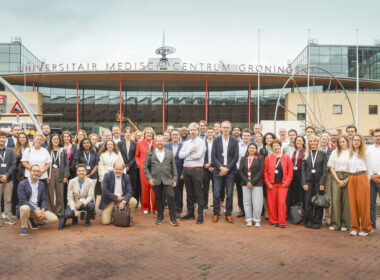
EXIT-CVD Consortium Partners
EXIT-CVD Consortium Partners
Philips Spectral CT in use with patient
Philips Spectral CT in use with patient
Philips Spectral CT
Philips Spectral CT
October 15, 2026 Five-year research project unites 42 public and private partners across 17 countries to conduct 22 clinical studies involving 14,000+ patients; first patients will be enrolled this monthProject aims to help cardiac patients avoid deterioration through early, personalized interventions delivered across the cardiac care journeyInterventions will be co-created with patients and designed to systematically address socioeconomic, sex- and gender-related and digital access gapsWith a total budget of EUR 27.6 million, the project is co-funded by the European Union Innovative Health Initiative (IHI) and industry partners Amsterdam, the Netherlands – Royal Philips (NYSE: PHG, AEX: PHIA), a global leader in health technology, today announced the launch of the five-year EXIT-CVD research project, co-funded by the European Union Innovative Health Initiative (IHI) and the industry partners. The research consortium is led by University Medical Center Groningen (UMCG) and Philips, and aims to transform how cardiovascular disease is detected, monitored and treated. It will do so by identifying and acting on three key exit points along the cardiac care journey: preventing disease before it develops (early exit), reversing disease progression (mid exit), or halting progression in advanced stages (late exit). Patient enrollment for the first of the 22 clinical studies will begin this month. Cardiovascular health is fundamental to overall health and well-being, yet more than 60 million people in the European Union are living with cardiovascular disease. For many, the condition significantly reduces quality of life and well-being. Without early detection, timely diagnosis and appropriate treatment, cardiovascular disease can progress silently from early risk factors to established disease and ultimately, cardiac events that may lead to premature death. “Our vision is a future where heart disease is no longer an irreversible pathway,” said Professor Pim van der Harst, Project Coordinator of EXIT-CVD and Head of Cardiology at the University Medical Center Groningen. “By understanding both the biological and social drivers of cardiovascular disease, and deploying integrated innovations across diagnostics, monitoring, and care, we can empower patients and clinicians to exit the disease continuum before it’s too late.” “For more than 30 years, we have viewed cardiovascular disease as a continuous journey, from risk factors such as hypertension, to atherosclerosis, a first cardiac event and ultimately, for many patients, heart failure,” said Robin Nijveldt, Chief of Cardiology at UMC Utrecht. “Yet most of us improve care within our own specialty and rarely have a complete view of the patient’s experience. EXIT-CVD is an ambitious effort to build that holistic view together, helping transform cardiac care for millions of patients across Europe.” The EXIT-CVD clinical studies will focus on the three key exit points along the cardiac care journey: early detection through digital monitoring (early exit), personalized risk assessment and targeted interventions (mid exit), and advanced therapies to support recovery in later-stage disease (late exit). By combining diagnostics, digital tools and advanced therapeutic approaches, EXIT-CVD aims to deliver actionable, evidence-based strategies that can be implemented across diverse healthcare systems in Europe. Innovation that reaches everyoneNew diagnostics and digital tools often reach well-resourced populations first, widening gaps in access and outcomes. The project will therefore embed implementation science and equity-by-design principles to ensure that the solutions are scalable, sustainable, and accessible to all relevant populations, including those historically underserved. A digitally enabled, FAIR-compliant data platform aligned with the European Health Data Space (EHDS) will support the integration, evaluation, and real-world scalability of the project’s innovations. “The EXIT-CVD project focuses on three critical stages of cardiovascular disease progression where technology can make the greatest impact: preventing disease before it develops, reversing its progression and improving care for people with advanced disease,” said Bert van Meurs, Chief Business Leader Diagnosis and Treatment, Image Guided Therapy at Royal Philips. “Together with our consortium partners, we are exploring innovations ranging from contactless vital signs monitoring for early detection of patient deterioration to advanced spectral CT imaging that reveals tissue characteristics beyond anatomy. These technologies have the potential to give clinicians deeper insights and support earlier, more informed cardiac care.” Clinical studiesThe EXIT-CVD research consortium will conduct a total of 22 clinical studies involving more than 14,000 patients across Europe, including: Camera-Based In-Hospital Monitoring (CARDIO-CAM study): Deployment and evaluation of an unobtrusive, video-based patient monitoring system that continuously captures cardiorespiratory signals and relevant clinical context.Spectral CT for Early Detection, Risk Stratification and Personalized Patient Care Pathways (LEADER-PAD study): Development and validation of new approaches for the early detection of cardiovascular disease in asymptomatic and low risk symptomatic patients using spectral CT.Nurse/HCP-Led Remote Heart Failure Monitoring (REMODEL-HF study): Multinational randomized study evaluating the Heart Failure Management System (HFMS), a non-invasive remote monitoring technology, in patients recently hospitalized for heart failure, with the objective of improving outcomes and optimizing guideline-directed medical therapy.Imaging-Guided PCI Randomized Trial (GUIDANCE-PCCT study): Evaluation of clinical and procedural outcomes of PCI guided by photon counting CT versus standard angiography-guided PCI.Advanced Imaging in Infiltrative Cardiomyopathies (NOTIFY-2 study): Validation of AI-driven image and ECG analysis algorithms to improve early diagnosis of Left Ventricular Hypertrophy (LVH) and underlying disease risk stratification. Consortium partnersThe IHI EXIT-CVD public-private partnership comprises 42 partner organizations from 17 countries: Clinical and academic partners: Hospital de la Santa Creu i Sant Pau (Spain), Politecnico di Milano (Italy), University of Pavia (Italy), Centro Cardiologico Monzino (Italy), EOC (Switzerland), KU Leuven (Belgium), NIKARD (Poland), UMC Utrecht (Netherlands), UMC Groningen (Netherlands), Technical University Eindhoven (Netherlands), Universitätsklinikum Köln (Germany), King’s College London (UK), London School of Economics and Political Science (UK), and Varsinais-Suomen Hyvinvointialue (Finland).Industry partners: Philips, Circle CVI, GE Healthcare, Siemens Healthineers, HeartBeam, Medtronic, Huawei, XVIVO Perfusion, AstraZeneca, Cardiomed, Megi Health, Viatris, Cordys, Novartis, Corbotics, ZOLL, Sanofi, Repairon, Johnson & Johnson MedTech Heart Recovery, Onsentia, and CogStackHealthcare consultancy: Bridg Ou and IQVIA SolutionsPatient organization: Stichting VrouwenHartMedical association: European Society of Cardiology (ESC) More information can be viewed on the EXIT-CVD website. This project is supported by the Innovative Health Initiative Joint Undertaking (IHI JU) under grant agreement No 101253160. The JU receives support from the European Union’s Horizon Europe research and innovation program and COCIR, EFPIA, Europa Bío, MedTech Europe, and Vaccines Europe. Funded by the European Union, the private members, and those contributing partners of the IHI JU. Views and opinions expressed are those of the author(s) only and do not necessarily reflect those of the aforementioned parties. Neither of the aforementioned parties can be held responsible for them. The opinions and clinical experiences presented herein are specific to the featured clinician(s) and are for information purposes only. Individual results may vary depending on a variety of patient-specific attributes and related factors. Nothing in this article is intended to provide specific medical advice or to take the place of written law or regulations. For further information, please contact: Joost MalthaPhilips Global External RelationsTel.: +31 6 1055816E-mail: joost.maltha@philips.com About Royal Philips Royal Philips (NYSE: PHG, AEX: PHIA) is a leading health technology company focused on improving people’s health and well-being through meaningful innovation. Philips’ patient- and people-centric innovation leverages advanced technology and deep clinical and consumer insights to deliver personal health solutions for consumers and professional health solutions for healthcare providers and their patients in the hospital and the home.Headquartered in the Netherlands, the company is a leader in diagnostic imaging, ultrasound, image-guided therapy, monitoring and enterprise informatics, as well as in personal health. Philips generated 2025 sales of EUR 18 billion and employs approximately 63,700 employees with sales and services in more than 100 countries. News about Philips can be found at www.philips.com/newscenter.
Attachments
EXIT-CVD Consortium Partners
Philips Spectral CT in use with patient
Philips Spectral CT
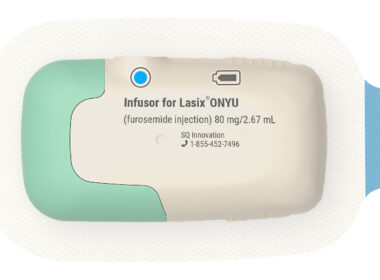
Patients self-administered a hospital-equivalent diuretic treatment resulting in a reduction of approximately 4 inpatient days per episode, according to study published in the Journal of the American College of Cardiology. BURLINGTON, Mass., Oct. 14, 2026 /PRNewswire/ — SQ Innovation…
LAS VEGAS, Oct. 14, 2026 /PRNewswire/ — The VIVA Foundation, a not-for-profit organization dedicated to advancing the field of vascular medicine and intervention through education and research, announced results from Late-Breaking Clinical Trial sessions at VIVA 2026, held at Bellagio…

DUBLIN–(BUSINESS WIRE)– #CardiovascularHealth–B-Secur and Beacon Hospital Research Institute launch clinical pilot to bring ECG data from any consumer wearable directly into the clinical workflow.

LATHAM, N.Y.–(BUSINESS WIRE)–AngioDynamics, Inc. (NASDAQ: ANGO), a leading and transformative medical technology company focused on restoring healthy blood flow in the body’s vascular system, expanding cancer treatment options, and improving quality of life for patients, today announced that Humana has updated its Medicare Advantage coverage policy to apply Local Coverage Determination (LCD) L40205 medical necessity criteria for irreversible electroporation (IRE), the non-thermal ablation tec
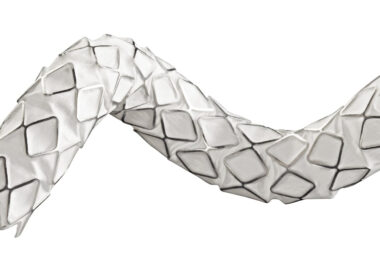
Approval brings U.S. vascular surgeons the first on-label bridging stent graft for both fenestrated and branched endovascular aortic repair, as three-year clinical outcomes demonstrate safety and effectiveness. FLAGSTAFF, Ariz., Oct. 14, 2026 /PRNewswire/ — W. L. Gore & Associates’…


