Coronary/Structural Heart

Roche receives CE Mark for its Chest Pain Triage algorithm to enhance detection of Acute Coronary Syndrome (ACS)

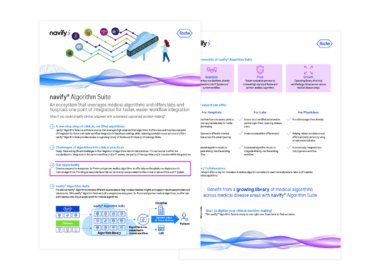
Roche, in collaboration with Universitätsklinikum Heidelberg, has developed a Chest Pain Triage algorithm – a CE-marked IVD medical device1 set to transform cardiac careThis novel algorithm offers a standardised assessment, helping emergency room doctors to make confident clinical decisions in ruling in or ruling out heart attacks (acute myocardial infarction)Cardiovascular disease causes a third of worldwide deaths2, with chest pain being the second highest reason for emergency department (ED) visits3 Basel, 23 April 2025 – Roche (SIX: RO, ROG; OTCQX: RHHBY) announced today the introduction of its innovative Chest Pain Triage algorithm as part of the navifyⓇ Algorithm Suite. This groundbreaking algorithm is designed to more quickly and accurately detect Acute Coronary Syndrome (ACS) in patients presenting with chest pain, one of the most common reasons for Emergency Department (ED) visits. As EDs are typically one of the most crowded hospital units, leading to challenges to swiftly diagnose critical conditions, such as chest pain.4 This new algorithm was developed in collaboration with Universitätsklinikum Heidelberg. The Chest Pain Triage algorithm leverages state-of-the-art diagnostic technologies, including high-sensitivity cardiac troponin testing, to provide healthcare professionals with timely and reliable data to differentiate between cardiac and non-cardiac chest pain. This advanced algorithm is part of a wider integrated offering from Roche to address ACS, including the use of the cardiac troponin T Assay and integration with existing lab solutions, offering an efficient and comprehensive approach to patient triage in emergency settings. The Chest Pain Triage algorithm also leverages the European Society of Cardiology’s (ESC) guidelines, and leading cardiologists and emergency medicine experts contributed to the development of the algorithm. “The introduction of our Chest Pain Triage algorithm underscores Roche’s commitment to improving care for cardiovascular disease, one of the world’s largest health burdens,” said Matt Sause, CEO, Roche Diagnostics. “One of the major challenges in managing chest pain in the emergency department is the length of stay, especially since some patients aren’t actually having a heart attack. Our Chest Pain Triage algorithm can help doctors quickly decide who needs urgent cardiac care and who could be discharged sooner. With an early rule-out pathway, we can cut down Emergency Department visit times by over three hours.5” The new algorithm aims to identify patients genuinely at risk by accurately identifying non-cardiac chest pain cases through a definitive Rule-In, Rule-Out or Observe recommendation according to the ESC guidelines. The algorithm simplifies decision making by automatically selecting the proper ESC 0/1, 0/2, or 0/3 accelerated pathway, based on the timing of the blood sample collection. This has the potential to reduce unnecessary hospital admissions and associated costs. The algorithm also expedites the treatment process for patients with true ACS with Rapid Assessments of chest pain onset more than three hours before the first blood sample. In addition, it includes a medical dossier for clinician support, and simplifies documentation by allowing doctors to easily copy recommendations and results into patient records.  For more information, please visit the Chest Pain Triage algorithm site. The development of the Chest Pain Triage algorithm is part of Roche’s commitment to early identification and treatment of Cardiovascular disease. The algorithm is available in Europe, the Middle East, and Asia, with availability in the United States at a later date, through Roche’s navify Algorithm Suite, and can be integrated into current emergency department workflows*. Roche’s cardiometabolic portfolio supports faster and more accurate triage decisions, and future ACS offerings will combine next-generation digital algorithms, biomarkers, near patient care devices, and laboratory analyzers. The navify Algorithm Suite is a cloud-based platform hosting clinical algorithms from Roche and partners. It provides labs and hospitals with direct workflow integration through Electronic Health Records (EHR) and Lab Information Systems (LIS) for faster and more efficient processes.  About navify The navify portfolio from Roche includes more than 30 digital solutions for labs, hospitals and patients worldwide. navify solutions connect the healthcare community with a robust digital infrastructure to integrate data efficiently and to accelerate clinician access to innovations as well as operational and medical insights. This work includes collaborating with other innovative companies such as Fortinet in cybersecurity services. The navify platform is designed to deliver security at every step of the data analytical process. All data is encrypted at rest and in transit. The solution is operated in compliance with applicable laws and regulations in the USA with HIPAA  (Health Insurance Portability and Accountability) as well as with GDPR (General Data Protection Regulation) regulations in Europe. Healthcare professionals can visit navify Marketplace to browse and request a growing number of next generation digital solutions from Roche and other companies — all designed to drive operational and clinical excellence, built on the foundational pillars of digital trust. More information is also available at navify.com. About Roche Founded in 1896 in Basel, Switzerland, as one of the first industrial manufacturers of branded medicines, Roche has grown into the world’s largest biotechnology company and the global leader in in-vitro diagnostics. The company pursues scientific excellence to discover and develop medicines and diagnostics for improving and saving the lives of people around the world. We are a pioneer in personalised healthcare and want to further transform how healthcare is delivered to have an even greater impact. To provide the best care for each person we partner with many stakeholders and combine our strengths in Diagnostics and Pharma with data insights from the clinical practice. For over 125 years, sustainability has been an integral part of Roche’s business. As a science-driven company, our greatest contribution to society is developing innovative medicines and diagnostics that help people live healthier lives. Roche is committed to the Science Based Targets initiative and the Sustainable Markets Initiative to achieve net zero by 2045. Genentech, in the United States, is a wholly owned member of the Roche Group. Roche is the majority shareholder in Chugai Pharmaceutical, Japan. For more information, please visit www.roche.com. All trademarks used or mentioned in this release are protected by law. * Availability will depend on the specific market and country in some cases. Please consult a local Roche representative for the availability of the chest pain algorithm in your market References [1] European Union: EUR-Lex. Chest Pain Triage algorithm registration [Internet: accesses March 24, 2025] Chest Pain Triage algorithm is an in-vitro diagnostic (IVD) medical device CE-marked (NB 0123)  under the requirements laid out in the IVD regulation (EU) 2017/746 (IVDR). [2] Saloni D et al. Cardiovascular Diseases. [Internet: accessed March 24, 2025]. Available from: https://ourworldindata.org/cardiovascular-diseases?insight=cardiovascular-diseases-are-the-most-common-cause-of-death-worldwide#all-charts [3] Yukselen Z, Majmundar V, Dasari M, Arun Kumar P, Singh Y. Chest Pain Risk Stratification in the Emergency Department: Current Perspectives. Open Access Emerg Med. 2024 Feb 4;16:29-43. doi: 10.2147/OAEM.S419657. PMID: 38343728; PMCID: PMC10853047 [4] Sartini M, et al. Overcrowding in Emergency Department: Causes, consequences, and solutions – a narrative review. Healthcare (Basel). 2022 Aug;10(9):1625) [5] Anand A, et al. High-sensitivity cardiac troponin on presentation to rule out myocardial infarction: A stepped-wedge cluster randomized controlled trial. Circulation. 2021 Jun;143(23):2214-2224) Roche Global Media Relations Phone: +41 61 688 8888 / e-mail: media.relations@roche.com Hans Trees, PhD Phone: +41 79 407 72 58 Sileia Urech Phone: +41 79 935 81 48   Nathalie Altermatt Phone: +41 79 771 05 25 Lorena Corfas Phone: +41 79 568 24 95   Simon Goldsborough Phone: +44 797 32 72 915 Karsten Kleine Phone: +41 79 461 86 83   Nina Mählitz Phone: +41 79 327 54 74 Kirti Pandey Phone: +49 172 6367262   Yvette Petillon Phone: +41 79 961 92 50 Dr Rebekka Schnell Phone: +41 79 205 27 03
Attachment

23042025_MR_Roche navify chest pain_en

Orchestra BioMed Receives FDA Breakthrough Device Designation for AVIM Therapy

Breakthrough Device Designation (“BDD”) applies to an estimated U.S. population of over 7.7 million patients with uncontrolled hypertension and increased cardiovascular riskBDD also encompasses pacemaker-indicated patients with uncontrolled hypertension who are the focus of the BACKBEAT global pivotal study Orchestra BioMed is currently enrolling in strategic collaboration with Medtronic, plc (NYSE: MDT)BDD status provides accelerated FDA engagement and reviews for AVIM therapy; it also supports potential pathways to secure higher reimbursement for AVIM-enabled devices in the future NEW HOPE, Pa., April 22, 2025 (GLOBE NEWSWIRE) — Orchestra BioMed Holdings, Inc. (Nasdaq: OBIO) (“Orchestra BioMed” or the “Company”), a biomedical company accelerating high-impact technologies to patients through risk-reward sharing partnerships, today announced that the U.S. Food and Drug Administration (“FDA”) has granted Breakthrough Device Designation (“BDD”) for atrioventricular interval modulation (“AVIM”) therapy. Specifically, the BDD is for an implantable system (i.e., a pacemaker) to deliver AVIM therapy using conduction system pacing to reduce blood pressure in patients with increased ten-year atherosclerotic cardiovascular disease (“ASCVD”) risk, preserved left ventricular systolic function, and uncontrolled hypertension, despite the use of anti-hypertensive medications or in patients who may have intolerance to anti-hypertensive medications. Orchestra BioMed estimates that there are over 7.7 million patients in the U.S. that meet the criteria for the BDD for AVIM therapy. AVIM therapy is currently being evaluated under an FDA investigational device exemption (“IDE”) in the BACKBEAT global pivotal study which is being conducted by Orchestra BioMed in collaboration with Medtronic. The BACKBEAT pivotal study is enrolling pacemaker-indicated patients with uncontrolled hypertension despite the use of anti-hypertensive medication, a key subpopulation under the BDD for which Orchestra BioMed believes AVIM therapy may offer optimal clinical benefit. “We are delighted to have received FDA Breakthrough Device Designation for AVIM therapy which has the potential to offer a differentiated, advantageous solution for hypertension management in a broad population,” commented David Hochman, Chairman and Chief Executive Officer of Orchestra BioMed. “Patients at higher risk for mortality and morbidity associated with high blood pressure are the core of the population we are actively enrolling in the BACKBEAT global pivotal study of hypertensive pacemaker-indicated patients in collaboration with Medtronic. The FDA Breakthrough Device Designation recognizes the potential of this unique therapy to benefit a significantly expanded number of patients who are not indicated for a pacemaker but who also have uncontrolled hypertension and increased cardiovascular risk. We are committed to working closely with the FDA, Medtronic and the clinical community to maximize the impact of AVIM therapy.” The FDA Breakthrough Devices Program, which reflects the FDA’s commitment to device innovation and protecting public health, is designed to expedite the development and provide priority review of innovative medical technologies that have the potential to significantly improve outcomes for patients with serious or life-threatening conditions. To be eligible for this designation, a device must demonstrate the potential to provide more effective treatment or diagnosis of a life-threatening or irreversibly debilitating condition. In addition, the device must meet at least one of the following criteria: it must represent breakthrough technology, have no approved or cleared alternatives, offer significant advantages over existing options, or be determined by the FDA to be in the best interest of patients. Beyond regulatory acceleration, the Breakthrough designation may also support favorable reimbursement pathways, including eligibility for incremental inpatient reimbursement through the New Technology Add-on Payment (“NTAP”) and outpatient Transitional Pass-Through payments (“TPT”) under the Center for Medicare & Medicaid Services (“CMS”) programs. These mechanisms may help facilitate more timely access to breakthrough technologies while supporting provider adoption and patient access. “We are very pleased that AVIM therapy received Breakthrough Device Designation, a recognition of the potential of AVIM therapy to address unmet needs in hypertension management,” said Robert C. Kowal, M.D., Ph.D., Vice President and General Manager of Cardiac Pacing Therapies within the Medtronic Cardiac Rhythm Management operating unit. “Hypertension remains a significant global public health challenge that is especially relevant to the pacemaker population as the most common comorbidity in these patients. Medtronic is committed to collaborating with Orchestra BioMed to advance this innovative, investigational therapy through the BACKBEAT global pivotal study.” Orchestra BioMed has a strategic collaboration with Medtronic, the global market leader in cardiac pacing therapies, for development and commercialization of AVIM therapy for the treatment of uncontrolled hypertension in pacemaker-indicated patients. Under the terms of the existing collaboration agreement, Medtronic holds the right of first negotiation to expand its licensing agreement with Orchestra BioMed to obtain global rights to commercialize AVIM therapy for the treatment of uncontrolled hypertension in patients that do not have an indication for a pacemaker. About Orchestra BioMed Orchestra BioMed (Nasdaq: OBIO) is a biomedical innovation company accelerating high-impact technologies to patients through risk-reward sharing partnerships with leading medical device companies. Orchestra BioMed’s partnership-enabled business model focuses on forging strategic collaborations with leading medical device companies to drive successful global commercialization of products it develops. Orchestra BioMed’s lead product candidate is atrioventricular interval modulation (AVIM) therapy for the treatment of hypertension, a significant risk factor for death worldwide. Orchestra BioMed is also developing the Virtue® Sirolimus AngioInfusion™ Balloon (SAB) for the treatment of atherosclerotic artery disease, the leading cause of mortality worldwide. Orchestra BioMed has a strategic collaboration with Medtronic, one of the largest medical device companies in the world, for development and commercialization of AVIM therapy for the treatment of hypertension in pacemaker-indicated patients, and a strategic partnership with Terumo, a global leader in medical technology, for development and commercialization of Virtue SAB for the treatment of artery disease. For further information about Orchestra BioMed, please visit www.orchestrabiomed.com, and follow us on LinkedIn. References to Websites and Social Media Platforms References to information included on, or accessible through, websites and social media platforms do not constitute incorporation by reference of the information contained at or available through such websites or social media platforms, and you should not consider such information to be part of this press release. About AVIM Therapy AVIM therapy is an investigational therapy compatible with standard dual-chamber pacemakers designed to substantially and persistently lower blood pressure. It has been evaluated in pilot studies in patients with hypertension who are also indicated for a pacemaker. MODERATO II, a double-blind, randomized pilot study, showed that patients treated with AVIM therapy experienced net reductions of 8.1 mmHg in 24-hour ambulatory systolic blood pressure (aSBP) and 12.3 mmHg in office systolic blood pressure (oSBP) at six months when compared to control patients. In addition to reducing blood pressure, clinical results using AVIM therapy demonstrate improvements in cardiac function and hemodynamics. The BACKBEAT (BradycArdia paCemaKer with atrioventricular interval modulation for Blood prEssure treAtmenT) global pivotal study will further evaluate the safety and efficacy of AVIM therapy in lowering blood pressure in patients who have systolic blood pressure above target despite anti-hypertensive medication and who are indicated for or have recently received a dual-chamber cardiac pacemaker. About the FDA Breakthrough Device Program The FDA Breakthrough Device Program, established in 2015, is designed to expedite the development, review, and potential market access of medical devices that may offer more effective treatment or diagnosis for life-threatening or irreversibly debilitating conditions. The designation provides manufacturers with prioritized FDA review and early, frequent interactions with agency experts to efficiently address development and regulatory considerations. Breakthrough status may also support streamlined reimbursement pathways, including eligibility for New Technology Add-on Payments (NTAP) and Transitional Pass-Through Payments (TPT), by helping to demonstrate substantial clinical improvement. Forward-Looking Statements Certain statements included in this press release that are not historical facts are forward-looking statements for purposes of the safe harbor provisions under the United States Private Securities Litigation Reform Act of 1995. Forward-looking statements generally are accompanied by words such as “believe,” “may,” “will,” “estimate,” “continue,” “anticipate,” “intend,” “expect,” “should,” “would,” “plan,” “predict,” “potential,” “seem,” “seek,” “future,” “outlook” and similar expressions that predict or indicate future events or trends or that are not statements of historical matters. These forward-looking statements include, but are not limited to, statements relating to the potential efficacy, safety and commercial value of the Company’s commercial product candidates, including the ability of AVIM therapy to favorably influence ventricular function, implementation of the Company’s ongoing BACKBEAT global pivotal study, the potential benefits of BDD, including its ability to expedite FDA reviews and streamline reimbursement pathways, the ability of the Company’s partnerships to accelerate clinical development, the nature and speed of the FDA’s review and regulatory process with respect to AVIM therapy, the ability to secure Medicare incremental payment programs, and the Company’s late-stage development programs and strategic partnerships. These statements are based on various assumptions, whether or not identified in this press release, and on the current expectations of the Company’s management and are not predictions of actual performance. These forward-looking statements are provided for illustrative purposes only and are not intended to serve as and must not be relied on as a guarantee, an assurance, a prediction, or a definitive statement of fact or probability. Actual events and circumstances are difficult or impossible to predict and may differ from assumptions. Many actual events and circumstances are beyond the control of the Company. These forward-looking statements are subject to a number of risks and uncertainties, including changes in domestic and foreign business, market, financial, political, and legal conditions; risks related to regulatory approval of the Company’s product candidates and ongoing regulation of the Company’s product candidates, if approved; the timing of, and the Company’s ability to achieve, expected regulatory and business milestones; the impact of competitive products and product candidates; and the risk factors discussed under the heading “Item 1A. Risk Factors” in the Company’s annual report on Form 10-K for the year ended December 31, 2024, which was filed with the U.S. Securities and Exchange Commission on March 31, 2025, as updated by any risk factors disclosed under the heading “Item 1A. Risk Factors” in Part II of the Company’s subsequently filed quarterly reports on Form 10-Q. The Company operates in a very competitive and rapidly changing environment. New risks emerge from time to time. Given these risks and uncertainties, the Company cautions against placing undue reliance on these forward-looking statements, which only speak as of the date of this press release. The Company does not plan and undertakes no obligation to update any of the forward-looking statements made herein, except as required by law. Investor ContactSilas NewcombOrchestra BioMed (908) 723-4489 Snewcomb@orchestrabiomed.com Media ContactKelsey Kirk-EllisOrchestra BioMed(484) 682-4892Kkirkellis@orchestrabiomed.com

Arch Biopartners Announces Toronto General Hospital Ethics Board Approval to Join the Phase II Trial for LSALT Peptide Targeting Cardiac Surgery Associated-Acute Kidney Injury (CS-AKI)

TORONTO, April 22, 2025 (GLOBE NEWSWIRE) — Arch Biopartners Inc., (“Arch” or the “Company”) (TSX Venture: ARCH and OTCQB: ACHFF), announced today that the University Health Network (UHN) Research Ethics Board has granted approval for Toronto General Hospital to participate in the Company’s ongoing Phase II trial evaluating LSALT peptide for the prevention and treatment of cardiac surgery-associated acute kidney injury (CS-AKI).

Transverse Medical Inc. Announces Completion of First Series of Patients in Feasibility Clinical Study at Victorian Heart Hospital, Melbourne, Australia, Using Point-Guard Cerebral Embolic Protection.

DENVER–(BUSINESS WIRE)–Transverse Medical Inc. is excited to announce the completion of the first series of patients under its Feasibility Clinical Study at the prestigious Victorian Heart Hospital in Melbourne, Australia. The patients undergoing TAVR procedures (Transcatheter Aortic Valve Replacement) were treated using the company’s next generation POINT-GUARD™ Cerebral Embolic Protection […]

Eight-Year Data Confirm Long-Term Durability of Edwards’ RESILIA Tissue

CAIRO–(BUSINESS WIRE)–Edwards Lifesciences (NYSE: EW) today announced new eight-year data showing that patients receiving aortic surgical valves treated with its proprietary RESILIA tissue technology have significantly improved long-term outcomes compared to those receiving non-RESILIA tissue bioprosthetic valves. For more than 65 years, Edwards has been the leader in heart valve […]

Daxor Corporation to Showcase Innovative Blood Volume Analysis at MedAxiom Cardiovascular Transforum Spring 2025

WellStar Health System to Highlight New BVA-Driven Strategy That Significantly Reduces Kidney Injury Following LVAD Implantation Oak Ridge, TN, April 17, 2025 (GLOBE NEWSWIRE) — Daxor Corporation (Nasdaq: DXR), the global leader in blood volume measurement technology, announces today it will be exhibiting at the MedAxiom CV Transforum Spring’25 Conference being held at the Renaissance Orlando at SeaWorld in Orlando, FL from April 24-26, 2025. The Cardiovascular Transforum conference unites cardiovascular thought leaders from across the country to transform cardiovascular care together with leading industry innovators. Wellstar Health System’s Dr. Brian Howard will present findings showing how their Advanced Heart Failure program successfully reduced acute kidney injury rates following left ventricular assist device implantation through a multi-tiered approach centered on blood volume analysis (BVA). The presentation will share results from their retrospective cohort study and provide implementation strategies for attendees to replicate in their own programs. “We’re honored to have expert clinicians share their firsthand experience with BVA—why it matters, how to effectively integrate it into heart failure programs, and the meaningful impact it has on patient outcomes and quality of life,” said Michael Feldschuh, CEO and President of Daxor. BVA guided care has been shown in peer-reviewed studies to significantly improve multiple measures of patient outcomes including a reduction in 30-day mortality by 82%, 1-year mortality by 86%, 30-day readmissions by 56%, and results in a 55% reduction in length of stay when done on admission (P

Terumo Health Outcomes Now Offers FDA-Cleared Medis QFR® 3.0 Software for Coronary Physiology Assessment in the US

– Innovative AI software supports hospital adoption of advanced tools to improve cath lab workflow and patient comfort – SOMERSET, N.J., April 16, 2025 /PRNewswire/ — Terumo Health Outcomes (THO), a division of Terumo Interventional Systems (TIS), today announced that Medis QFR 3.0, an…

Cellino Announces Partnership with Karis Bio to Develop First Nebula™-Powered Autologous iPSC Therapy for Cardiovascular Disease

CAMBRIDGE, Mass. & ATLANTA & SEOUL, South Korea–(BUSINESS WIRE)–Cellino, a biotechnology company pioneering autonomous biomanufacturing for personalized regenerative medicine, today announced its expansion into the Asia-Pacific region through a strategic collaboration with Karis Bio, a leading South Korean cell therapy biotech. The partnership aims to industrialize the world’s first clinical-stage […]

FDA grants clearance for HeartFocus, the transformative AI-powered cardiac imaging software

The milestone signals a new era of access for cardiac care, enabling any healthcare professional to perform diagnostic-grade echos anytime, anywhere.    BORDEAUX, France, April 15, 2025 – DESKi today announced FDA clearance for HeartFocus, its AI-enabled heart exam software that empowers any healthcare professional, including novices, to perform clinical-quality […]