Neuro

Imperative Care Announces FDA Clearance and Initial Cases of the Zoom 6F Insert Catheters, the First Insert Catheters Built for Stroke

July 17, 2024 08:00 AM Eastern Daylight Time CAMPBELL, Calif.–(BUSINESS WIRE)–Imperative Care, Inc., today announced U.S. Food and Drug Administration (FDA) 510(k) clearance of its Zoom™ 6F Insert Catheters, the company’s latest innovation in elevating stroke care and the first insert catheters developed specifically for ischemic stroke procedures. The company […]

TeleSpecialists Revolutionizes Stroke Care with Launch of Innovative EMS Integration Service

EMS Integration to enhance door-to-needle times and elevate patient outcomes
FORT MYERS, Fla., July 16, 2024 /PRNewswire/ — TeleSpecialists, LLC, the nation’s largest inpatient provider of TeleStroke and TeleNeurology services, launches its EMS Integration service as an enhancement to its current neurology services. This new service will allow TeleSpecialists’ board-certified neurologists to expedite stroke treatment and improve patient outcomes.
TeleSpecialists introduces the EMS Integration service for EMS and local hospitals, to enhance patient care in telestroke and teleneurology. This program enables physicians to interact with EMS teams, and hospitals simultaneously during patient transport. Early teleneurology involvement reduces door-to-needle times by connecting a neurologist on-screen during transit to conduct essential tests. With improved efficiency and collaboration, patients can receive a CT scan immediately upon arrival at the hospital. 
“At TeleSpecialists, we are dedicated to pioneering innovations that enhance patient care. Our EMS Integration service represents a major advancement in our ability to improve patient outcomes, particularly in stroke care,” said Nima Mowzoon, MD, MBA, CEO of TeleSpecialists. “By enabling real-time neurology consultations en route to the hospital, we can significantly expedite treatment times and save more lives. This initiative is a testament to our commitment to leveraging technology to deliver the highest quality care to our communities.”
The introduction of the EMS Integration program emphasizes the organization’s commitment to clinical collaboration and continuous improvement in stroke care. This program aims to establish seamless communication between EMS providers and TeleSpecialists to provide timely and effective care for stroke patients in diverse settings. By integrating EMS into its TeleNeurology processes, the company seeks to optimize the delivery of critical interventions and resources, ultimately improving patient outcomes.
The launch of the EMS Integration program at Oak Hill and Bayonet Point Hospital in Hernando County marks a significant milestone in expanding and enhancing TeleSpecialists’ services. With over 10 years of experience and over one million patients seen, this initiative underscores the company’s commitment to delivering improved outcomes to these communities.
About TeleSpecialists, LLCAs the leader in TeleStroke and TeleNeurology and a reliable provider of exceptional TelePsychiatry services in the US, we lead the industry with unmatched quality, scale, and expertise. We seamlessly integrate cutting-edge technology with compassionate care, always striving to preserve and enhance lives through our commitment to excellence.
SOURCE TeleSpecialists

Avicenna.AI secures MDR certification for medical imaging AI portfolio

French AI company achieves key EU regulatory compliance for multiple algorithms that identify, detect, and quantify severe conditions from medical images. 
LA CIOTAT, France, July 3, 2024 /PRNewswire/ — Avicenna.AI, a leading medical imaging AI company, has received Medical Device Regulation (MDR) certificate for five of its algorithms from certification body BSI Medical Devices. This development means the company’s product portfolio is fully compliant with the European Union’s MDR 2017/745, which is now mandatory for medical device companies that want to provide their solutions in Europe.
The MDR was introduced to update the EU’s regulations for medical devices, addressing safety issues and the recent emergence of AI tools and software as a medical device (SaMD), which did not exist when the old regulations were created. Ensuring MDR compliance is a critical component of obtaining and maintaining CE-mark status, which allows a device to be freely traded in the EU.
Compared to the previous Medical Device Directive (MDD), the MDR has a wider scope and more stringent requirements. It emphasizes clinical evaluation, post-market surveillance, device traceability, rigorous technical documentation, and risk management. These measures aim to enhance patient safety and ensure high standards for medical devices, including AI and software-based solutions.
Avicenna.AI’s products have been certified as Class IIb medical devices, which requires a high level of clinical validation. The certified products include the company’s suite of AI tools for neurovascular conditions, as well as its suite of algorithms for vascular conditions.
“Obtaining MDR certification is a significant milestone for Avicenna.AI,” said Stéphane Berger, Regulatory Manager at Avicenna.AI. “It demonstrates our commitment to meeting the highest standards of medical device safety and performance. This certification not only reinforces our dedication to compliance but also assures our customers of the quality and reliability of our AI product portfolio.”
The company’s MDR-certified AI tools include algorithms for intracranial hemorrhage (CINA-ICH), large vessel occlusion (CINA-LVO), quantification of stroke severity (CINA-ASPECTS), aortic dissection (CINA-AD), pulmonary embolism (CINA-PE), and opportunistic cases of pulmonary embolism (CINA-iPE). All the products are also CE-marked and FDA-cleared.
“Crucially, despite the differences in SaMD regulatory requirements between authorities in the US and Europe, we are consistently achieving both FDA and CE mark clearance for our AI products,” added Berger.
All of Avicenna.AI’s AI tools are seamlessly integrated into radiologists’ clinical workflow, automatically triggering and reporting algorithm results through the systems already used by radiologists.
About Avicenna.AIFounded in 2018, Avicenna.AI specializes in providing healthcare AI solutions that utilize deep learning to identify, detect, and quantify severe pathologies from CT medical images. Co-founded by Cyril Di Grandi, a successful entrepreneur who previously co-founded Olea Medical, and Dr. Peter Chang, an internationally recognized radiologist, and an expert in AI and deep learning, Avicenna.AI aims to accelerate therapeutic decision-making processes and enhance patient outcomes through its AI-based radiology solutions. For additional details, stay connected with us on social media and explore Avicenna.AI’s website at www.avicenna.ai. 
For more information, contact:Stéphanie Bellavia, Marketing Manager, Avicenna.AIEmail: [email protected] 
SOURCE Avicenna.AI

Acasti Announces Achievement of 50% Enrollment in Pivotal Phase 3 STRIVE-ON Safety Trial

PRINCETON, N.J., June 27, 2024 (GLOBE NEWSWIRE) — Acasti Pharma Inc. (Nasdaq: ACST) (Acasti or the Company), a late-stage, biopharma company advancing GTX-104, its novel injectable formulation of nimodipine that addresses high unmet medical needs for a rare disease, aneurysmal subarachnoid hemorrhage (aSAH), today announced that the Company’s pivotal Phase 3 STRIVE-ON safety trial (the STRIVE-ON trial–NCT05995405) has exceeded the 50% enrollment milestone. The STRIVE-ON trial, a prospective, open-label, randomized (1:1 ratio), parallel group trial of GTX-104 compared with oral nimodipine in 100 patients hospitalized for aSAH, initiated patient enrollment in October of 2023. The primary endpoint is safety and will be measured as comparative adverse events, including hypotension, between the two groups. “Since dosing the first patient in STRIVE-ON last October, we have continued to build momentum by activating high volume neurocritical care hospitals across the country with unrelenting focus on executing patient enrollment and investigator engagement,” said Prashant Kohli, CEO of Acasti. “Achievement of our 50% enrollment milestone reflects laser sharp focus from both our participating clinical trial sites and the Acasti team. Investigators continue to be enthusiastic about the potential of GTX-104 as an IV alternative to oral nimodipine for the treatment of aSAH. Based on a comprehensive review of enrollment factors, we currently anticipate randomizing all 100 patients in late 2024 to early 2025, while staying on track for a potential NDA submission to the FDA in the first half of calendar 2025.” “Patients with aSAH require intensive management and present with a variety of complications that make consistent administration of oral nimodipine difficult especially in patients with severe neurological deficits with dysphasia or requiring mechanical ventilation,” said Dr. Abhishek Ray, Associate Professor of Neurological Surgery at University Hospitals Cleveland, Case Western Reserve University School of Medicine. “GTX-104 shows great promise as an IV alternative to the current standard of care, and we look forward to assessing the data obtained from this trial.” About aneurysmal Subarachnoid Hemorrhage (aSAH) aSAH is bleeding over the surface of the brain in the subarachnoid space between the brain and the skull, which contains blood vessels that supply the brain. A primary cause of such bleeding is the rupture of an aneurysm. Approximately 70% of aSAH patients experience death or dependence, and more than 30% die within one month of hemorrhage. Approximately 50,000 patients in the United States are affected by aSAH per year, based on market research. Outside of the United States, annual cases of aSAH are estimated at approximately 60,000 in the European Union, and approximately 150,000 in China. About the GTX-104 GTX-104 is a clinical stage, novel, injectable formulation of nimodipine being developed for intravenous (IV) infusion in aSAH patients to address significant unmet medical needs. The unique nanoparticle technology of GTX-104 facilitates aqueous formulation of insoluble nimodipine for a standard peripheral IV infusion. GTX-104 provides a convenient IV delivery of nimodipine in the Intensive Care Unit potentially eliminating the need for nasogastric tube administration in unconscious or dysphagic patients. Intravenous delivery of GTX-104 also has the potential to lower food effects, drug-to-drug interactions, and eliminate potential dosing errors. Further, GTX-104 has the potential to better manage hypotension in aSAH patients. GTX-104 has been administered in over 150 healthy volunteers and was well tolerated with significantly lower inter- and intra-subject pharmacokinetic variability compared to oral nimodipine. The addressable market in the United States for GTX-104 is estimated to be about $300 million, based on market research. About Acasti Acasti is a late-stage biopharma company with drug candidates addressing rare and orphan diseases. Acasti’s novel drug delivery technologies have the potential to improve the performance of currently marketed drugs by achieving faster onset of action, enhanced efficacy, reduced side effects, and more convenient drug delivery. Acasti’s lead clinical assets have each been granted Orphan Drug Designation by the FDA, which provides seven years of marketing exclusivity post-launch in the United States, and additional intellectual property protection with over 40 granted and pending patents. Acasti’s lead clinical asset, GTX-104, is an intravenous infusion targeting aneurysmal Subarachnoid Hemorrhage (aSAH), a rare and life-threatening medical emergency in which bleeding occurs over the surface of the brain in the subarachnoid space between the brain and skull. For more information, please visit: www.acasti.com. Forward-Looking Statements Statements in this press release that are not statements of historical or current fact constitute “forward-looking statements” within the meaning of the U.S. Private Securities Litigation Reform Act of 1995, as amended, Section 27A of the Securities Act of 1933, as amended, and Section 21E of the Securities Exchange Act of 1934, as amended, and “forward-looking information” within the meaning of Canadian securities laws (collectively, “forward-looking statements”). Such forward looking statements involve known and unknown risks, uncertainties, and other factors that could cause the actual results of Acasti to be materially different from historical results or from any future results expressed or implied by such forward-looking statements. In addition to statements which explicitly describe such risks and uncertainties, readers are urged to consider statements containing the terms “believes,” “belief,” “expects,” “intends,” “anticipates,” “estimates”, “potential,” “should,” “may,” “will,” “plans,” “continue”, “targeted” or other similar expressions to be uncertain and forward-looking. Readers are cautioned not to place undue reliance on these forward-looking statements, which speak only as of the date of this press release. The forward-looking statements in this press release, including statements regarding the Company’s anticipated enrollment and NDA submission schedule for the STRIVE-ON trial, GTX-104’s commercial prospects, and GTX-104’s potential to bring enhanced treatment options to patients suffering from aSAH are based upon Acasti’s current expectations and involve assumptions that may never materialize or may prove to be incorrect. Actual results and the timing of events could differ materially from those anticipated in such forward-looking statements as a result of various risks and uncertainties, including, without limitation: (i) the success and timing of regulatory submissions of the Phase 3 safety trial for GTX-104; (ii) regulatory requirements or developments and the outcome and timing of the proposed NDA application for GTX-104; (iii) changes to clinical trial designs and regulatory pathways; (iv) legislative, regulatory, political and economic developments; and (v) actual costs associated with Acasti’s clinical trials as compared to management’s current expectations. The foregoing list of important factors that could cause actual events to differ from expectations should not be construed as exhaustive and should be read in conjunction with statements that are included herein and elsewhere, including the risk factors detailed in documents that have been and are filed by Acasti from time to time with the Securities and Exchange Commission and Canadian securities regulators. All forward-looking statements contained in this press release speak only as of the date on which they were made. Acasti undertakes no obligation to update such statements to reflect events that occur or circumstances that exist after the date on which they were made, except as required by applicable securities laws. For more information, please contact: Acasti Contact: Prashant KohliChief Executive OfficerTel: 450-686-4555Email: info@acastipharma.com www.acasti.com  Investor Relations: LifeSci AdvisorsMike MoyerManaging DirectorPhone: 617-308-4306Email:  mmoyer@lifesciadvisors.com  

Bioxodes meets first Phase 2a patient enrollment milestone with BIOX-101 in intracerebral hemorrhagic stroke

 First-in-class drug candidate evaluated in first eight patients Gosselies (Belgium), June 27, 2024 – Bioxodes SA, a clinical stage biopharmaceutical company developing novel therapies for the prevention and treatment of thrombotic and inflammatory diseases, announces today that it has enrolled the first eight of 32 patients in a Phase 2a clinical study of its lead asset BIOX-101 (Ir-CPI). The study is evaluating BIOX-101 in intracerebral hemorrhagic stroke (ICH), a devastating condition for which there is currently no available treatment. Reaching this first milestone allows Bioxodes to conduct an initial analysis of pharmacokinetic and pharmacodynamic data to evaluate the dose-response and preliminary clinical proof-of concept of the therapeutic candidate, as well as safety in this patient population. “For the first time, we are able to assess the preliminary results of BIOX-101 in ICH patients, who up until now have had very few treatment options. Analysis of these first 8 patients will yield preliminary proof-of-concept data for BIOX-101, a first-in-class drug candidate derived from a protein found in the saliva of the tick 1, designed to prevent the harmful secondary brain injuries that occur after a hemorrhagic stroke,” said Marc Dechamps, Chief Executive Officer at Bioxodes. The study, conducted in 10 stroke units in Belgium and led by Prof Robin Lemmens, a world-leading stroke authority and head of the clinic at the University Hospital Leuven, aims to enroll 32 patients aged 18 and above, with 24 receiving BIOX-101, and 8 standard-of-care treatment. The trial is a randomized, open-label proof-of-concept study, and will evaluate the safety and tolerability of BIOX-101 in patients with spontaneous ICH, while also generating preliminary data on secondary efficacy objectives. All patients will be monitored for at least one year to evaluate the impact of the treatment on long-term functional outcomes. Interim results for the first 16 patients are expected by the fourth quarter of 2024. BIOX-101 prevents blood clot formation without increasing the risk of further bleeding. Moreover, by inhibiting the activation of neutrophils, a type of white blood cell that often act as the first responders of the inflammatory system, it also prevents the acute neuroinflammatory events associated with ICH. BIOX-101 is also in early development as a platform for a series of other indications, including ischemic stroke and other thrombo-inflammatory diseases. KEY FACTS ABOUT STROKE:* 15 million people worldwide suffer from a stroke each year, * Of those, 5 million die, another 5 million are left severely disabled* Stroke is the leading cause of disability among neurological conditions worldwide, according to the Global Burden of Disease Study 2021 (Lancet Neurology May 2024).* Two types: ischemic stroke (caused by a blood clot) and hemorrhagic stroke (ruptured vessel)* Hemorrhagic stroke makes up 13% of all cases, but causes 40% of deaths* Intracerebral hemorrhagic stroke (ICH) is by far the most common type of hemorrhagic stroke * For hemorrhagic stroke, there is little other to do than surgery, with poor outcomes* Bioxodes has applied for an orphan disease designation for BIOX-101 in the US and EU. Being awarded the designation could accelerate the regulatory approval process. 1 Ixodes ricinus About Bioxodes Bioxodes is a clinical stage biopharmaceutical company developing novel therapies for the prevention and treatment of thrombotic and inflammatory diseases. Since its founding in 2013, Bioxodes has developed its lead asset BIOX-101, a first-in-class drug candidate aimed at patients with thrombo-inflammatory disease. BIOX-101’s unique mechanism of action is the foundation of an innovative pipeline of drug candidates for the prevention of (thrombo)inflammatory diseases. The company, which is based in the biopark of Gosselies near Brussels in Belgium, has so far secured €34 million in funding from Belgian investment funds and business angels, including €12 million in non-dilutive funding from the Wallonia region. Worldwide, Bioxodes holds both granted and pending patents associated with BIOX-101. http://www.bioxodes.com/ For more information please contact: HEAD OFFICESBioPark Charleroi-Bruxelles SudRue Santos-Dumont, 16041 Gosselies, Belgium+32 496 590354investment@bioxodes.com MEDIA RELATIONSAlexandra Schiettekatte alexandra.alicato@outlook.com+32 476 65 04 38COHESION BUREAUEU MEDIA RELATIONSSophie Baumontsophie.baumont@cohesionbureau.comINVESTOR RELATIONSGiovanni Ca’ Zorzigiovanni.cazorzi@cohesionbureau.com   
Attachment

20240627 Bioxodes PR first 8 patients (final) EN

First-in-Human Data for Sensome Clot-Sensing Guidewire Used in Ischemic Stroke Treatment Demonstrate Ability to Automate Clot Characterization With No Safety Issues

PARIS–(BUSINESS WIRE)–Sensome, the pioneer of microsensing technology for instant intra-operative tissue analysis, today announced positive results from its first-in-human CLOT OUT clinical trial evaluating the safety and performance of its Clotild® Smart Guidewire System used during mechanical thrombectomy treating ischemic stroke. The results showed that the technology met all primary […]

Remedy Pharmaceuticals Gets Rights To Acute Stroke Drug Back From Biogen; Announces Clinically Meaningful and Statistically Significant Results From Pre-specified Subgroup and Post Hoc Analyses of Phase 3 Study

NEW YORK, May 29, 2024 /PRNewswire/ — Remedy Pharmaceuticals, a pioneer in stroke drug development, announced that prespecified subgroup analyses from the Phase 3 CHARM clinical trial of CIRARA (IV glibenclamide) showed meaningful improvements in functional outcomes on the modified Rankin Scale (mRS), which were further validated in post hoc analyses.
The findings follow the early termination of the pivotal Phase 3 trial by Cambridge-based Biogen after a strategic realignment of resources, and the return of the program to Remedy.
The CHARM clinical trial was a multicenter, multinational, double-blind, randomized, placebo-controlled Phase 3 study involving patients aged 18-85 with a large hemispheric infarction (LHI), as indicated by an Alberta Stroke Program Early Computed Tomographic (CT) Score (ASPECTS) value of 1-5 (on a scale of 0-10) or an ischemic core volume of 80-300 ml by CT perfusion (CTP) or magnetic resonance imaging (MRI) diffusion weighted imaging. Patients were eligible if study drug was expected to start within 10 hours after they were last known well and were randomly assigned in a 1:1 ratio of CIRARA or placebo. A total of 535 patients were enrolled, including 431 patients aged 18-70 (the efficacy analysis population) and 81 patients aged 71-85.
Despite neutral top-line results, in pre-specified analyses, patients who received rtPA, underwent endovascular thrombectomy (EVT), were enrolled using CTP/MRI, had wake-up strokes, or were enrolled in the U.S., all had directionally improved functional outcomes in favor of CIRARA. A pre-specified analysis in patients with an NIH Stroke Scale (NIHSS) ≤20 (n=274) yielded statistically significant improvements in functional outcomes (Odds Ratio 1.66, p=0.03). With EVT therapy increasingly used in LHI, the Odds Ratio of 1.75 in the EVT subset, while not statistically significant, was particularly encouraging.
Building on these findings, post hoc analyses examining the impact of stroke severity on outcomes were performed and revealed significant findings:

In the mITT population with CTP/MRI lesion volume

Ceretrieve Announces Groundbreaking Success in FIH Ischemic Stroke Cases

Ceretrieve’s aspiration catheter demonstrated clots removal, completely restoring blood flow in a single pass.YOKNEAM, Israel, May 28, 2024 /PRNewswire/ — Ceretrieve announced today the successful results of the company’s multicenter, single-arm study, showcasing the capabilities of its state-of-the-art aspiration catheter. The study, conducted across two centers, included 20 patients who suffered from acute ischemic stroke (AIS) due to intracranial large vessel occlusion (LVO) and were eligible for thrombectomy within 24 hours of symptom onset. The study was aimed for assessing the safety and initial performance of the Ceretrieve Device.Redefining Stroke Treatment

Continue Reading

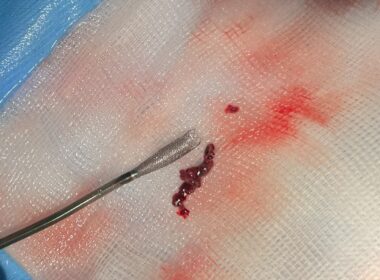
A brain clot removed with Ceretrieve’s device

Ceretrieve’s mission is to transform stroke care, save lives, minimize disability, and significantly improve post-stroke quality of life. Ceretrieve’s aspiration catheter is at the forefront of this mission, delivering aspiration capabilities that are far superior when compared to existing devices, allowing clot(s) removal in a single pass, while fully restoring blood flow. Designed for seamless integration within a conventional 6Fr delivery catheter, Ceretrieve’s device offers exceptional trackability and maneuverability, ensuring efficient access to the clot location.
As shown in the study conducted, Ceretrieve’s aspiration catheter not only excelled in performance but also ensured the highest safety standards by reducing the risk of releasing clot fragments further into the brain. In the first-in-human (FIH) study 80% Complete/Near-Complete Perfusion was achieved.The study included two generations of the device, and the results with the improved Gen 2 device are highly impressive: 100% Complete/Near-Complete Perfusion achieved in all treated patients; and 83% First Pass Complete Perfusion (FPE mTICI 3), far exceeding the 30%-40% rate of current gold-standard devices.Ceretrieve’s CEO, Maysa Mustafa: “The promising results of our clinical studies are the culmination of years of hard work and R&D. Our mission to redefine stroke treatment drives everything we do, and these results signify a major leap forward in saving and dramatically improving lives following an ischemic stroke.””The ‘first pass effect’ has been shown to improve patient outcomes” says Dr. Shady Jashan (Galilee Medical Center, Israel) who performed the first neuro thrombectomy procedure with the Ceretrieve device. “Our experience in FIH trials demonstrated that the Ceretrieve device quickly enables complete clot ingestion in first pass even for the most challenging clots and anatomies. This has the potential to dramatically improve patient clinical outcomes.”Prof. Serder Geyik, MD (Florya Medical Park, Turkey): “The term ‘Everything comes with a price’ is not valid for the Ceretrieve device. Ceretrieve’s device aspirates the clot with a giant bore tip- double than the largest catheters in the market, for maximal vacuum effect without paying the price in trackability. In addition, it provides local flow restriction in the middle cerebral artery reducing distal emboli. It is the only device that includes all the features for successful thrombectomy and first pass effect in one single device. “Amir Belson, M.D., Ceretrieve Chair: “With Ceretrieve’s advanced technology, we are seeing significant improvements in patient recovery rates. This innovation is setting a new standard in stroke care, offering patients better outcomes and real hope for recovery.”About Ceretrieve Ceretrieve’s vision is to be the doctor’s first-choice device in treating ischemic stroke offering complete treatment with superior performance in one device. Ceretrieve was established in 2017 in collaboration with The Trendlines Group (SGX:42T) (OTCQX: TRNLY), a leading investment group based in Israel and Singapore, as well as the Israel Innovation Authority (IIA) Incubators Program. Agriline and several angel investors are among the Company’s additional investors.Contact:Maysa Mustafa, CEO[email protected]Photo – https://mma.prnewswire.com/media/2423407/Ceretrieve_case.jpgSOURCE Ceretrieve

Results from BRAIN.Q’s EMAGINE Study on the Use of AI-Powered Electromagnetic Field Therapy Offer Hope for Meaningful Recovery Following Stroke

Promising results from the EMAGINE randomized trial suggest that treatment with BRAIN.Q’s AI-powered low electromagnetic field stimulation, aimed at enhancing the brain’s ability to relearn processes lost after a stroke, may help patients regain ‘freedom from disability’ with greater…