Tag: AI

Philips-led projects win ITEA awards for advancing AI-enabled healthcare innovation

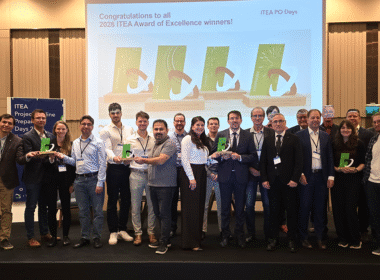
Winners of the 2026 ITEA Awards of Excellence

Winners of the 2026 ITEA Awards of Excellence

September 16, 2026 SYMPHONY receives ITEA’s highest excellence award for connected healthcare ecosystemsAI FORSchung is recognized for innovation in AI-powered fiber-optic sensing Amsterdam, the Netherlands – Royal Philips (NYSE: PHG, AEX: PHIA), a global leader in health technology, today announced that two Philips-led public-private research collaborations have received ITEA Awards of Excellence 2026 for advancing AI-enabled innovation in healthcare. SYMPHONY received the ITEA Award of Excellence for “Exceptional Excellence” for connecting healthcare data, clinical workflows and AI-supported decision tools through open, interoperable ecosystems. AI FORSchung received the ITEA Award of Excellence for Innovation for developing AI-driven methods to compress and analyze large volumes of fiber-optic sensing data. The awards were presented at the ITEA PO Days 2026 in Istanbul, Turkey. Connecting data and AI around clinical workflowsSYMPHONY developed a reusable, vendor-neutral reference architecture and demonstrated connected healthcare ecosystems across four clinical areas: prostate cancer, aortic aneurysm, atrial fibrillation and multiple sclerosis with clinical partners including Leiden University Medical Center, Amsterdam University Medical Center and Karolinska University Hospital. Philips also developed technology within SYMPHONY to automatically segment and measure vascular structures in medical images, supporting the assessment and follow-up of aortic aneurysms. The resulting functionality has received FDA clearance and CE marking and is included in AV Vascular, a part of the Philips AV Cardiovascular Suite.“Healthcare AI creates the greatest value when it can work with the information and clinical workflows that care teams already depend on,” said Sanjay Gandhi, Head of Medical Affairs & Clinical Partnerships at Philips. “SYMPHONY shows what becomes possible when healthcare providers, researchers and technology companies build around open standards and clinical pathways rather than isolated applications.” This real-world implementation was demonstrated through many close collaborations including the one between Philips and Leiden University Medical Center (LUMC), where standards-based integration was the focus. “Together with Philips, the LUMC demonstrated in SYMPHONY how vendor-neutral, standards-based integration of clinical data, imaging and applications, including the AV Vascular Segmentation solution, can support real clinical workflows,” said Jouke Dijkstra, Associate Professor, Vascular and Molecular Imaging at LUMC. The project created a reusable foundation for deploying innovative digital health solutions, also tailored towards AI algorithm integration, across institutions and disease areas.” Making growing sensing datasets more manageableFiber Optic RealShape (FORS) technology is used to support medical device navigation during image-guided procedures, generating large volumes of position data that need to be stored and processed efficiently. Within AI FORSchung, researchers developed new methods to make these data volumes easier to manage, demonstrating that FORS position data could be compressed more than 20 times while maintaining performance within the evaluated datasets.“The challenge extends well beyond healthcare,” said Ahmet Ekin, Senior Designer at Philips. “Fiber-optic sensing is also used to monitor critical infrastructure such as pipelines, bridges and tunnels, where continuous monitoring generates substantial volumes of data. By developing approaches that can be applied across healthcare, utilities and civil infrastructure, AI FORSchung demonstrated how advances in one field can help address shared data challenges in another.Both projects were conducted within ITEA, the Eureka Research, Development and Innovation Cluster on software innovation, funded by multiple national authorities including the Netherlands Enterprise Agency (RVO). Additional information about SYMPHONY can be found here: https://itea4.org/project/symphony.html; https://symphony-iteaproject.eu/Additional information about AI FORSchung can be found here: https://itea4.org/project/ai-forschung.html For further information, please contact: Joost MalthaPhilips Global External RelationsTel.: +31 6 1055816E-mail: joost.maltha@philips.com About Royal Philips  Royal Philips (NYSE: PHG, AEX: PHIA) is a leading health technology company focused on improving people’s health and well-being through meaningful innovation. Philips’ patient- and people-centric innovation leverages advanced technology and deep clinical and consumer insights to deliver personal health solutions for consumers and professional health solutions for healthcare providers and their patients in the hospital and the home.Headquartered in the Netherlands, the company is a leader in image-guided therapy, diagnostic imaging, ultrasound, monitoring, enterprise informatics and personal health. Philips generated 2025 sales of approximately EUR 18 billion and employs approximately 63,700 employees with sales and services in more than 100 countries. News about Philips can be found at www.philips.com/newscenter.
Attachment

Winners of the 2026 ITEA Awards of Excellence

Carnegie Mellon University and Cleveland Clinic Develop AI System to Interpret Cardiac MRI Scans with Enhanced Accuracy

PITTSBURGH & CLEVELAND–(BUSINESS WIRE)– #AI–A team of researchers from Carnegie Mellon University, in collaboration with Cleveland Clinic’s Cardiovascular Innovation Research Center, has developed an artificial intelligence (AI) system capable of interpreting some of the most complex heart scans in medicine, cardiac magnetic resonance imaging (MRI), without the need for manually labeled training data. The novel system, called CMR-CLIP, is designed to interpret cardiac MRI scans by connecting movin

MemorialCare Heart & Vascular Institute Becomes First Hospital in Los Angeles County to Offer Cleerly AI-Powered Heart Disease Analysis, Quantifying Total Plaque Volume and Soft Plaque

Systemwide launch brings AI powered assessment to Coronary CTA’s to MemorialCare’s Long Beach Medical Center, Orange Coast Medical Center, and Saddleback Medical Center. FOUNTAIN VALLEY, Calif., May 20, 2026 /PRNewswire/ — MemorialCare today announced the systemwide implementation of…

Elsevier expands ClinicalKey AI with unrivaled full-text knowledge base and technology upgrades to help clinicians make decisions with confidence

ClinicalKey AI now includes full-text content from premium journals and medical organizations such as The Lancet, the New England Journal of Medicine (NEJM), the European Society For Medical Oncology and the American College of Cardiology, offering the broadest collection of trusted…

The Lancet Publishes TRICORDER Study: Real-World Evaluation Shows Increased Detection When Eko AI-Enabled Stethoscopes Are Used in Primary Care

Large-scale NHS trial led by Imperial College London across 200+ NHS practices shows significant gains in early cardiac disease detection through AI-assisted stethoscope exams SAN FRANCISCO, Jan. 29, 2026 /PRNewswire/ — Eko Health, a leader in AI-powered cardiac and pulmonary disease…

Philips brings AI into the procedure room to assist doctors during heart valve repair

 November 17, 2025Innovation uses AI to track and visualize tiny repair devices* through the beating heart, helping clinicians navigate in 3D with enhanced clarity and confidence**Amsterdam, the Netherlands – Royal Philips (NYSE: PHG, AEX: PHIA), a global leader in health technology, today introduced DeviceGuide, an AI-powered device tracking* solution that assists physicians during one of interventional cardiology’s most technically demanding procedures: repairing leaking heart valves through a minimally invasive approach. Built on Philips’ EchoNavigator platform, this software brings AI directly into the procedure room, translating complex imaging into intuitive, real-time visual guidance that helps clinicians navigate the beating heart with greater clarity and confidence. It will be previewed at London Valves 2025 (November 16-18), one of the world’s leading meetings for structural heart specialists.“With DeviceGuide, we’re bringing AI into the heart of the procedure room, and into the heart itself,” said Dr. Atul Gupta, Chief Medical Officer, Diagnosis & Treatment at Philips. “This is Philips’ first AI assisting physicians in real time to visualize and guide heart valve treatment devices* as they navigate the beating heart. It’s helping doctors in the moment as they are helping their patients with structural heart disease.”Minimally invasive treatment of the mitral valveA leaking heart valve, known as mitral valve regurgitation, is a condition in which blood leaks backward through the heart’s mitral valve. It affects more than 35 million [1] adults worldwide, leaving many short of breath, fatigued, and struggling with everyday activities like climbing stairs or walking short distances. Many also live with anxiety or fear, knowing their heart isn’t pumping efficiently. If left untreated, severe cases can lead to heart failure and other serious complications.For patients who are too frail for open-heart surgery, minimally invasive transcatheter repair techniques such as mitral transcatheter edge-to-edge repair (M-TEER) offer a vital treatment option. During these procedures, physicians repair a leaking valve through a tiny incision in the top of the leg in the groin area, guiding long, flexible instruments through the blood veins and navigating a miniature repair device into the beating heart.Clinicians must view and interpret both X-ray and ultrasound images on multiple screens, coordinate movements between two operators, and make precise adjustments to grasp the moving valve leaflets, position the repair device, and confirm the result in real time. The process demands accuracy, coordination, and experience from the team. This is where DeviceGuide can help with its 3D navigation support.How AI is helpingDeviceGuide uses an AI algorithm to automatically track the tiny repair device as it moves through the beating heart, intelligently combining live echo and X-ray images. It creates a virtual 3D model of the treatment device in real time, superimposed on the live images of the beating heart. This allows clinicians to see where the device is and in which direction it is pointing, providing a clear view of the procedure and potentially enabling them to navigate the device more easily to effectively seal the leak.“The AI software serves as an assistive tool, with the physician always remaining in control. This isn’t about replacing expertise – it’s about amplifying it,” added Dr. Atul Gupta. “By embedding AI into the procedure, DeviceGuide gives physicians an extra pair of eyes, effectively bionic vision, helping them treat more patients safely and confidently.”Collaboration with Edwards LifesciencesThis innovation was developed in close collaboration with Edwards Lifesciences, the manufacturer of these repair devices. The solution combines Philips’ expertise in medical imaging and AI technologies with Edwards’ global leadership in structural heart innovation. Together, the companies have reimagined key parts of the mitral TEER procedural workflow.“DeviceGuide demonstrates the impact of combining leading imaging and therapy expertise to develop solutions designed around the procedural workflow, a model that will shape the future of AI-enabled image-guided structural interventions,” said Mark Stoffels, Business Leader, Image Guided Therapy Systems.This solution illustrates how Philips’ imaging and AI expertise can merge with the insights of leading therapy companies to innovate procedural workflows. This kind of collaboration is a model for developing the next generation of AI-enabled, image-guided innovations, centered on the needs of clinicians and their patients.Read more on how Philips DeviceGuide works here.

Fujifilm Partners with Us2.ai to Provide AI-Automated Echocardiography Analysis for Cardiologists and Sonographers Across the Nation

Fujifilm’s LISENDO 800 Ultrasound System Connects to AI-driven Us2.ai, providing users with fully automated analyses of all heart chambers using both 2D and doppler views LEXINGTON, Mass.–(BUSINESS WIRE)–FUJIFILM Healthcare Americas Corporation, a leading provider of diagnostic and enterprise imaging solutions and Us2.ai, a leader in AI-automated echocardiography solutions, have partnered to […]