Presentations Expand Understanding of Treatment Adherence, Long-Term Outcomes, Lipoprotein(a), Coagulation Biomarkers, and Potential Mechanisms of Eicosapentaenoic Acid (EPA) 2026 ESC/European Renal Association (ERA) Cardiovascular and Chronic Kidney Disease Guideline Further Reinforces the Clinical Evidence Supporting Icosapent Ethyl DUBLIN and BRIDGEWATER, N.J., Aug. 31, 2026 (GLOBE NEWSWIRE) — Amarin Corporation plc (NASDAQ:AMRN), a company committed to advancing the science of cardiovascular disease (CVD) worldwide, today highlighted findings from multiple Amarin supported presentations at the European Society of Cardiology (ESC) Congress 2026 in Munich, Germany. The research presented by leading academic collaborators further expanded understanding of treatment adherence, long-term cardiovascular outcomes, lipoprotein(a) [Lp(a)] biology, coagulation biomarkers and potential mechanistic pathways associated with eicosapentaenoic acid (EPA) and icosapent ethyl (IPE). The presentations build upon the significant body of evidence generated from REDUCE-IT and related scientific investigations. “The research presented at ESC Congress 2026 demonstrates the continued scientific value of REDUCE-IT and the breadth of insights that can be gained through ongoing clinical and mechanistic investigation,” said Deepak L. Bhatt, M.D., M.P.H., M.B.A., Director of Mount Sinai Fuster Heart Hospital and the Dr. Valentin Fuster Professor of Medicine at the Icahn School of Medicine at Mount Sinai. “These studies advance our understanding of important factors that influence residual cardiovascular risk, including lipoprotein(a) biology, treatment adherence, sex-related differences in study participation, and coagulation pathways. At the same time, mechanistic research continues to provide new insights into how EPA may favorably influence biological processes associated with cardiovascular disease. Despite meaningful progress in cardiovascular prevention, substantial residual risk remains for many patients, underscoring the importance of utilizing proven, complementary therapies as part of a comprehensive treatment strategy. Collectively, these findings further strengthen the body of scientific evidence supporting the role of icosapent ethyl in helping reduce cardiovascular risk in appropriately selected patients.” In addition, the recently published 2026 dedicated ESC Guidelines for the Management of Cardiovascular Disease and Chronic Kidney Disease, developed with the ERA, recognize evidence from the REDUCE-IT RENAL publication showing that icosapent ethyl reduced major adverse cardiovascular events in statin-treated patients with established ASCVD, elevated triglycerides, and chronic kidney disease.i Relative risk reductions were consistent across subgroups divided by estimated glomerular filtration rate (eGFR) at baseline, with absolute benefits largest in patients with eGFR

Tag: ESC
Late Breaking Data from Independent Government-Funded Trial at ESC Shows Heartflow FFRCT Analysis Reduces Unnecessary Invasive Heart Procedures by Nearly Half
FUSION trial presented at ESC and published in Journal of the American College of Cardiology demonstrates adding non-invasive lesion-specific physiology resolves critical diagnostic uncertainty, supporting Appropriate Use Criteria for cath lab referralsSAN FRANCISCO, Aug. 28, 2026 (GLOBE NEWSWIRE) — Heartflow, Inc. (Heartflow) (Nasdaq: HTFL), the leader in AI technology for diagnosing and managing coronary artery disease (CAD), today announced late-breaking one-year results from an independent randomized clinical trial proving the Heartflow FFRCT Analysis safely and significantly reduced unnecessary invasive heart procedures by 44% (p < 0.001). Presented as Late-Breaking Science at the European Society of Cardiology (ESC) Congress 2026, FUSION trial, funded by the Dutch National Health Care Institute, demonstrates that standard coronary computed tomography angiography (CCTA) alone drives overutilization of invasive catheterizations.1 By adding Heartflow FFRCT Analysis to standard CCTA scans, clinicians dramatically reduced diagnostic catheter lab procedures. The FUSION study has been published simultaneously in the Journal of the American College of Cardiology (JACC). CCTA is the primary first-line test recommended by both European (ESC) and U.S. (ACC/AHA) guidelines for evaluating patients with suspected CAD. However, visual assessment of CCTAs is limited to assessing anatomy and whether plaque is present; it cannot determine lesion-specific physiology or whether a blockage significantly restricts blood flow to the heart. This diagnostic uncertainty frequently leads physicians to refer patients for invasive coronary angiography (ICA), a hospital procedure where a catheter is threaded through an artery, normally in the groin or arm, to get into the heart to assess blocked or narrowed blood vessels.1,2,3,4 These findings show Heartflow FFRCT – the only AI platform prospectively validated against invasive gold standard – bridges this critical diagnostic gap. By applying advanced AI and computational fluid dynamics to standard CT scans with documented narrowings, Heartflow creates a personalized 3D model that quantifies blood flow within the coronary arteries.5 “CCTA is established as the optimal first-line diagnostic test for coronary artery disease as it is noninvasive, but when anatomical scans show intermediate stenosis, determining whether that blockage is clinically significant remains a critical challenge,” said Alexander Hirsch, M.D., principal investigator of the FUSION trial and associate professor of cardiology at Erasmus MC in Rotterdam, Netherlands. “The FUSION trial shows that adding Heartflow lesion-specific physiology makes CCTA even more powerful and improves diagnostic efficiency. It gives clinicians the clarity to know which patients require further invasive testing, safely avoiding unnecessary invasive catheterizations while maintaining excellent patient outcomes.” One-Year FUSION Results Enrolling 528 patients with stable chest pain across twelve hospitals in the Netherlands, FUSION is an independent randomized controlled trial funded through the Dutch government’s Zorginstituut Nederland ‘Potentially Promising Care’ program. The study evaluated Heartflow FFRCT Analysis across diverse scanner vendors in both academic and community hospital settings, with blinded, independent clinical event adjudication. Key 1-year findings include: A sustained 44% relative reduction in unnecessary ICA was demonstrated at one year in the Heartflow pathway compared to the CCTA-only group (22% [57/263] Heartflow vs. 39% [103/265] CCTA alone; p < 0.001), consistent with the 90-day primary endpoint results (18% [48/263] vs. 33% [87/265] CCTA alone; p < 0.001).Overall rates of ICA were significantly lower at one year in the Heartflow pathway compared to the CCTA-only group (43% [114/263] Heartflow vs. 61% [161/265] CCTA alone; p 50% non-obstructive rate in usual care elective caths).2 Gulati M, et al. 2021 AHA/ACC/ASE/CHEST/SAEM/SCCT/SCAI Guideline for the Evaluation and Diagnosis of Chest Pain. Circulation 2021; 144:e368–e454.3 Vrints C, et al. 2024 ESC Guidelines for the Management of Chronic Coronary Syndromes. Eur Heart J 2024; 00:1–105.4 Tonino PA, et al. Fractional Flow Reserve versus Angiography for Multivessel Evaluation (FAME). N Engl J Med 2009; 360:213-224.5 Taylor CA, et al. Computational Fluid Dynamics Applied to Coronary Computed Tomography Angiography. J Am Coll Cardiol 2013; 61(22):2233-2241.6 Curzen N, et al. Fractional Flow Reserve Derived From Computed Tomography in Suspected Stable Angina: The FORECAST Trial. Eur Heart J 2021; 42(37):3807-3818.7 Douglas PS, et al. A Clinical Pathway to Optimize the Diagnostic Workup of Patients With Suspected CAD: The PRECISE Randomized Trial. JAMA Cardiol 2023; 8(7):643–652.8 15-Year Evidence Base includes DISCOVER-FLOW (JACC 2011), DeFACTO (JAMA 2012), NXT (JACC 2014), PLATFORM (Eur Heart J 2015), and ADVANCE Registry (Eur Heart J 2019).9 Narula, et al. EHJ CVI 2024.10 Danad, et al. JAMA Cardiol 2017.11 Fairbairn et al. Coronary CT Angiography Plaque as a Predictor of Death, Cardiovascular Death and Myocardial Infarction. Presented at AHA 2025. (Real-world study with n=7,899 patients, higher TPV results in increased cardiovascular death and MI).12 Madsen KT, et al. ADVANCE-DK 7-year. Presented at TCT Scientific Sessions 2024. (n=900 patients determined a 2.5x increase in cardiovascular events or deaths at 7 years).
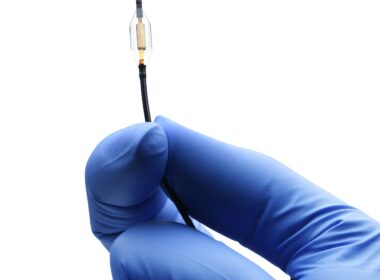
Vesalio Announces Late-Breaking Clinical Trial Presentation of the enVast NATURE Study at the ESC Congress 2026
NATURE trial, a prospective randomized controlled trial comparing the safety and effectiveness of thrombectomy using enVast before conventional PCI versus standard of care alone, was selected for the prestigious Late-Breaking Clinical Trials session at the European Society of Cardiology…
Recor Medical Endorses European Society of Cardiology’s New Guidelines for Management of Hypertension
The new ESC Guidelines for Management of Elevated Blood Pressure and Hypertension were presented at the ESC Congress in London and reinforce the safety and effectiveness of renal denervation, recommending its consideration as a treatment option to improve uncontrolled hypertension. PALO…
AMGEN PRESENTS LATE-BREAKING PHASE 2 OLPASIRAN DATA AT ESC 2023
THOUSAND OAKS, Calif., Aug. 26, 2023 /PRNewswire/ — Amgen (NASDAQ:AMGN) today announced data from the final analysis of the Phase 2 OCEAN(a)-DOSE study of olpasiran, a small interfering RNA (siRNA) during the Late-Breaking Science Session at the European Society of Cardiology (ESC) Annual Meeting being held in Amsterdam. In the off-treatment extension period, olpasiran […]
Novartis presents new long-term Leqvio® (inclisiran) data demonstrating consistent efficacy and safety beyond six years
EAST HANOVER, N.J., Aug. 28, 2023 /PRNewswire/ — Novartis today announced new long-term data from ORION-8, a Phase III open-label extension of ORION-9, ORION-10, ORION-11 and ORION-3 trials. The data demonstrated that with twice-yearly* dosing, Leqvio, in addition to statin therapy, provides consistent low-density lipoprotein cholesterol (LDL-C) reduction beyond six years in patients […]