Radiology

Philips launches Verida, world’s first detector-based spectral CT powered by breakthrough AI, to advance diagnostic precision

Philips Verida spectral CT system, angle view

Philips Verida spectral CT system, angle view

Philips Verida spectral CT system, straight-on view

Philips Verida spectral CT system, straight-on view

November 30, 2025 Philips pioneered detector-based spectral CT, which has been widely adopted in clinical routine exams across anatomies, supported by over 800 peer-reviewed publications [1]CE-marked, 510k pending Verida CT [2] integrates AI across the imaging chain, providing superb image quality while accelerating workflow and reducing dose [3, 4] Amsterdam, the Netherlands and Chicago, USA – At RSNA 2025, Royal Philips (NYSE: PHG, AEX: PHIA), a global leader in health technology, today announced the launch of Verida, the world’s first detector-based spectral CT fully powered by AI. This marks a transformative milestone in CT, with AI optimizing the entire imaging chain – lowering system noise, elevating image quality, and accelerating clinical workflow. With over 800 global installations and supported by over 800 peer-reviewed publications, Philips’ spectral CT uses PACS-native delivery and has been fully embedded into clinical workflow. Spectral CT measures how tissues absorb different x-ray energy levels, enabling differentiation of materials that appear identical on conventional CT. Philips has pioneered detector-based spectral CT, delivering multiple spectral results from a single scan with no tradeoffs in performance or scan time. Now, by integrating AI across the imaging chain, from acquisition to reconstruction, Philips Verida generates industry-leading, superior spectral image quality with minimal noise, in addition to high-definition conventional images. With its full AI capabilities, Verida can achieve dramatic dose reduction [5] without compromising image quality and reduce energy consumption by up to 45% [6]. “The clinical benefits of Verida will fundamentally change my approach to cardiac imaging,” said Prof. Eliseo Vañó Galván, cardiovascular radiologist, Chairman of the CT & MR Department at Hospital Nuestra. Sra. Del Rosario, Madrid, Spain. “With more comprehensive insights in every cardiac CT, I plan to make spectral imaging routine for all patients – building toward a fully spectral CT department. We evaluated many systems, including photon-counting CT, but chose Philips because it delivers the precision we need in a streamlined, easy-to-use platform. The result is greater diagnostic confidence and the potential to reduce the need for invasive angiograms – not just in cardiology, but across other clinical areas as well [7].” Verida reconstructs 145 images per second, so entire exams automatically appear in less than 30 seconds – 2× faster than before and enabling up to 270 exams every day [8]. Building on Philips’ proprietary Spectral Precise Image technology – a deep learning AI reconstruction engine combined with advanced spectral imaging – and its third-generation Nano-panel Precise dual-layer detector with intrinsic noise reduction optimized for AI, Verida is designed to deliver faster, more dose-efficient spectral reconstructions. This enables clinicians to access rich spectral information from a single scan. “Combining the latest advances in our proven spectral CT technology with AI, our flagship Verida CT system is designed to set a new standard in superior image quality and accelerated scans which are fully embedded in the radiology workflow, all to help clinicians detect and characterize disease earlier, reduce variability in diagnoses, and support efficient treatment pathways – in a single scan,” said Dan Xu, Business Leader of CT at Philips. “While photon-counting CT adds complexity, is yet to move from the research arena into clinical practice, Philips spectral CT has been a clinical workhorse for more than a decade and delivers comparable or better clinical outcomes, standing up to the most demanding throughput and at significantly lower total cost of ownership”. Verida extends Philips’ software-defined CT approach, pairing AI-driven spectral precision to advance both clinical and operational outcomes. Built for high-demand environments, it streamlines workflows, reduces repeat scans, and delivers consistently sharp imaging across all care pathways. Philips is debuting Verida at RSNA 2025, with availability in select markets beginning in 2026 [9]. [1] Data on file.  [2] CE marked and 510(k) pending. Not currently available for sale in the US.[3] Andersen MB et al. Impact of spectral body imaging in patients suspected for occult cancer: a prospective study of 503 patients. Eur Radiol2020. doi.org/10.1007/s00330-020-06878-7[4] Andersen MB et al. Economic impact of spectral body imaging in the diagnosis of patients suspected of occult cancer. Insights into Imaging 2021. doi.org/10.1186/s13244-021-01116-0. Results of customer testimonies are not predictive of results in other cases, where results may vary.[5] Dose reduction assessments were performed using reference body protocol. In clinical practice, the use of Spectral Precise Image may reduce CT patient dose depending on the clinical task, patient size, and anatomical location. A consultation with a radiologist and a physicist should be made to determine the appropriate dose to obtain diagnostic image quality for the particular clinical task. [6] Based on Axial Body 3D Scan with 80% dose reduction. Energy savings for system preparation is not included.[7] Spectral CT Verida Premium up to 270 (4 CIRS config) exams a day (16 hours dual shift working day) meeting the needs of radiology departments with extended work hours and very high patient throughput.[8] The statements of the clinician reflect independent opinion and are not intended to imply product performance prior to regulatory clearance.[9] Pending regulatory clearance. For further information, please contact: Anna HogrebePhilips Global External RelationsTel.: +1 416 270 6757E-mail: anna.hogrebe@philips.com About Royal Philips Royal Philips (NYSE: PHG, AEX: PHIA) is a leading health technology company focused on improving people’s health and well-being through meaningful innovation. Philips’ patient- and people-centric innovation leverages advanced technology and deep clinical and consumer insights to deliver personal health solutions for consumers and professional health solutions for healthcare providers and their patients in the hospital and the home.Headquartered in the Netherlands, the company is a leader in diagnostic imaging, ultrasound, image-guided therapy, monitoring and enterprise informatics, as well as in personal health. Philips generated 2024 sales of EUR 18 billion and employs approximately 67,000 employees with sales and services in more than 100 countries. News about Philips can be found at www.philips.com/newscenter.
Attachments

Philips Verida spectral CT system, angle view

Philips Verida spectral CT system, straight-on view

Validation study for EchoSolv HF completed at the Mayo Clinic – Study delivers exceptional results

SYDNEY, Nov. 24, 2025 (GLOBE NEWSWIRE) — AI and Medical Technology Company Echo IQ Limited (ASX: EIQ) (“Echo IQ” or “the Company”) is pleased to advise that it has completed its clinical validation for its heart failure clinical decision support software (“EchoSolv HF”) in collaboration with the Mayo Clinic Platform (“MCP”), a division of the Mayo Clinic, a top ranked US hospital. The MCP Validate program is a unique in-market AI evaluation program which generates an independent and objective report on accuracy, efficacy and susceptibility to bias for AI-based decision software (refer ASX Announcement 1 July 2025).

Sectra at RSNA 2025: Supporting subspecialty workflows and photon-counting CT at the workstation to reduce burnout risk and improve patient care

LINKÖPING, Sweden, Nov. 24, 2025 /PRNewswire/ — At this year’s Radiological Society of North America’s annual meeting (RSNA), international medical imaging IT and cybersecurity company Sectra (STO: SECT B) will present new developments designed to make radiology workflows even more…

GE HealthCare to acquire Intelerad, advancing cloud-enabled enterprise imaging across care settings

Creates a fully-connected, cloud-first imaging ecosystem spanning high-growth outpatient and ambulatory, teleradiology and hospital settings Brings AI and workflow orchestration, cloud PACS, and image sharing, all in a SaaS business model, to GE HealthCare Offers attractive return profile given high growth, recurring revenue base and strong margin profile of Intelerad, […]

Qure.ai partners with Microsoft to increase access to its lung cancer detection and management suite in the U.S.

 Accelerating early detection, reducing clinician burden, and enhancing patient outcomes   New York, November 18 2025: Qure.ai, a TIME100 most influential company and global leader in digital healthcare, today announced its collaboration with Microsoft. Qure.ai will onboard its end-to-end lung cancer detection, measurement and management suite of AI-powered solutions onto […]

Spryte Medical Receives FDA IDE Approval to Initiate “INSYTE” US Pivotal Trial evaluating the nOCT Imaging System during Brain Aneurysm Treatment

BEDFORD, Mass., Nov. 19, 2025 (GLOBE NEWSWIRE) — Spryte Medical, a pioneer in intravascular neuro imaging, announced it has received Investigational Device Exemption (IDE) approval from the U.S. Food and Drug Administration (FDA) to initiate the INSYTE pivotal trial. The trial will evaluate the safety and effectiveness of Spryte’s neuro Optical Coherence Tomography (nOCT) imaging system for use during intracranial aneurysm treatment procedures.

Delcath Systems Announces Publication of Expert Narrative Review on Percutaneous Hepatic Perfusion for Liver Metastases from Uveal Melanoma

QUEENSBURY, N.Y.–(BUSINESS WIRE)–Delcath Systems, Inc. (Nasdaq: DCTH), (“Delcath” or the “Company”) an interventional oncology company focused on the treatment of primary and metastatic liver cancers, today announced the publication of a narrative review by leading interventional radiologists and oncologists from multiple institutions. The review, titled “Treatment of Liver Metastases from […]

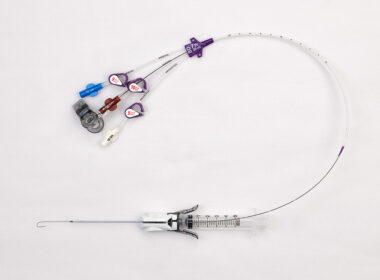
TriSalus Life Sciences Launches TriNav® XP Infusion System to Expand Options for Pressure-Enabled Drug Delivery™

WESTMINSTER, Colo.–(BUSINESS WIRE)–TriSalus Life Sciences, an oncology company integrating novel delivery technology with standard of care therapies to transform treatment for patients with solid tumors, is pleased to announce the launch of the TriNav® XP Infusion System, the latest advancement in the company’s portfolio of pressure-enabled drug delivery systems designed to improve […]

Nanox Announces Strategic Partnership with 3DR® Labs to Expand AI-Powered Imaging Solutions Across North America

3DR® Labs to Offer Nanox.AI’s FDA-Cleared Imaging Solutions to Its Network of More Than 1,800 Hospitals and Imaging Centers Across the U.S. PETACH TIKVA, Israel, Nov. 18, 2025 (GLOBE NEWSWIRE) — NANO-X IMAGING LTD (“Nanox” or the “Company”, Nasdaq: NNOX), an innovative medical imaging technology company, today announced a strategic reseller partnership with 3DR Labs, LLC, one of the largest providers of medical image post-processing services in the United States. Through this collaboration, 3DR Labs will offer Nanox.AI’s FDA-cleared solutions to its network of more than 1,800 hospitals, diagnostic imaging centers, and healthcare providers. Under the terms of the collaboration, 3DR Labs will integrate Nanox.AI’s advanced, FDA-cleared software solutions, HealthCCSng (AI cardiac solution), HealthOST (AI bone solution), and HealthFLD (AI liver solution), into its imaging services portfolio, making these AI-powered tools available to healthcare providers across its nationwide network. The partnership enables 3DR Labs to market, distribute Nanox.AI’s software solutions to its client base across North America. The agreement positions Nanox.AI’s technology to support early signs of disease detection and improve clinical outcomes management initiatives at scale across one of the largest medical imaging service networks in the United States. Founded in 2005, 3DR Labs provides continuous access to more than 300 expert radiologic technologists, cutting-edge imaging software, and AI-enabled workflow solutions. 3DR’s AI Labs, a vendor-agnostic platform, connects imaging departments to a gateway of 3D workflow automation, delivering quality, speed, and efficiency across healthcare systems. “This partnership represents one of our most significant U.S. reseller relationships to date and meaningfully expands our commercial reach,” said Erez Meltzer, CEO and Acting Chairman of Nanox. “3DR’s extensive, established relationships gives us a powerful channel to deliver our AI solutions to nearly two thousand healthcare organizations, which can use them to detect chronic diseases earlier.” Christy Mutchler, Vice President, Solutions Management of 3DR Labs, said, “Nanox.AI’s FDA-cleared solutions align perfectly with the population health priorities of the hospitals and imaging centers we serve. These tools can be seamlessly integrated into existing radiology workflows without disrupting clinical operations.” Nanox AI’s state-of-the-art software solutions use deep learning algorithms to automatically analyze routine CT scans for indicators of chronic disease that might otherwise go undetected: AI Cardiac solution, HealthCCSng, quantifies coronary artery calcium and classifies results according to Agatston categories, facilitating early detection of cardiovascular risk.AI Bone Solution, HealthOST, provides automated bone density and vertebral height loss evaluation for osteoporosis riskAI Liver Solution, HealthFLD, Liver attenuation measurement to identify patients at risk of fatty liver disease All three solutions are FDA-cleared and designed to integrate into existing radiology workflows, enabling opportunistic screening for multiple signs of chronic conditions from routine imaging studies.  Nanox entered into a commercial agreement with 3DR, whose CEO also serves as a director at Nanox. The agreement was approved in accordance with the law applicable to related-party transactions. About Nanox.AI Nanox.AI is the deep-learning medical imaging analytics subsidiary of Nanox. Nanox.AI solutions are developed to target highly prevalent chronic and acute diseases affecting large populations around the world. Leveraging AI, Nanox.AI helps clinicians extract valuable and actionable clinical insights from medical imaging that otherwise may go unnoticed, potentially initiating further medical assessment to establish individual preventative care pathways for patients. For more information, please visit www.nanox.vision/ai. About Nanox Nanox (NASDAQ: NNOX) is focused on driving the world’s transition to preventive health care by bringing a full solution of affordable medical imaging technologies based on advanced AI and proprietary digital X-ray source. Nanox’s vision encompasses expanding the reach of Nanox technology both within and beyond hospital settings, providing a seamless end-to-end solution from scan to diagnosis, leveraging AI to enhance the efficiency of routine medical imaging technology and processes, in order to improve early detection and treatment and maintaining a clinically driven approach. The Nanox ecosystem includes Nanox.ARC – a multi-source digital tomosynthesis system that is cost-effective and user-friendly; Nanox.AI LTD – an AI-based suite of algorithms that augment the readings of routine CT imaging to highlight early signs often related to chronic diseases; Nanox.CLOUD – a cloud-based software platform that manages and stores data collected by Nanox devices, and provides users with tools for in-depth imaging analysis; Nanox.MARKETPLACE – a proprietary decentralized marketplace through Nanox’s subsidiary, USARAD Holdings Inc., that provides remote access to radiology and cardiology experts, and a comprehensive teleradiology services platform. By improving early detection and treatment, Nanox aims to enhance better health outcomes worldwide. For more information, please visit www.nanox.vision. About 3DR Labs + Strings 3DR® Labs and its wholly owned subsidiary, Strings, transform medical imaging and healthcare operations through advanced technology, intelligent automation, and trusted expertise. Headquartered in Louisville, Kentucky, 3DR Labs provides continuous access to more than 300 expert radiologic technologists, cutting-edge imaging software, and AI-enabled workflow solutions. 3DR’s AI Labs, a vendor-agnostic platform, connects imaging departments to a gateway of 3D workflow automation, delivering quality, speed, and efficiency across healthcare systems. Strings, a leader in AI-driven workflow orchestration, extends these capabilities by learning, predicting, and automating both human and data tasks. Purpose-built for healthcare, Strings empowers providers, IT teams, and administrators to streamline operations, reduce costs, and improve patient outcomes through predictive automation. Together, 3DR Labs and Strings deliver end-to-end innovation that enhances imaging operations, optimizes performance, drives smarter, faster, and better care delivery across the healthcare continuum. For more information, please visit 3drlabs.com. Forward-Looking Statements This press release may contain forward-looking statements that are subject to risks and uncertainties. All statements that are not historical facts contained in this press release are forward-looking statements. Such statements include, but are not limited to, any statements relating to the initiation, timing, progress and results of the Company’s research and development, manufacturing, and commercialization activities with respect to its X-ray source technology and the Nanox.ARC, the ability to realize the expected benefits of its recent acquisitions and the projected business prospects of the Company and the acquired companies. In some cases, you can identify forward-looking statements by terminology such as “can,” “might,” “believe,” “may,” “estimate,” “continue,” “anticipate,” “intend,” “should,” “plan,” “should,” “could,” “expect,” “predict,” “potential,” or the negative of these terms or other similar expressions. Forward-looking statements are based on information the Company has when those statements are made or management’s good faith belief as of that time with respect to future events and are subject to risks and uncertainties that could cause actual performance or results to differ materially from those expressed in or suggested by the forward-looking statements. Factors that could cause actual results to differ materially from those currently anticipated include: risks related to (i) Nanox’s ability to complete development of the Nanox System; (ii) Nanox’s ability to successfully demonstrate the feasibility of its technology for commercial applications; (iii) Nanox’s expectations regarding the necessity of, timing of filing for, and receipt and maintenance of, regulatory clearances or approvals regarding its technology, the Nanox.ARC and Nanox.CLOUD from regulatory agencies worldwide and its ongoing compliance with applicable quality standards and regulatory requirements; (iv) Nanox’s ability to realize the anticipated benefits of the acquisitions, which may be affected by, among other things, competition, brand recognition, the ability of the acquired companies to grow and manage growth profitably and retain their key employees; (v) Nanox’s ability to enter into and maintain commercially reasonable arrangements with third-party manufacturers and suppliers to manufacture the Nanox.ARC; (vi) the market acceptance of the Nanox System and the proposed pay-per-scan business model; (vii) Nanox’s expectations regarding collaborations with third-parties and their potential benefits; (viii) Nanox’s ability to conduct business globally; (ix) changes in global, political, economic, business, competitive, market and regulatory forces; (x) risks related to the current war between Israel and Hamas and any worsening of the situation in Israel; (xi) risks related to business interruptions resulting from the COVID-19 pandemic or similar public health crises, among other things; and (xii) potential litigation associated with our transactions. For a discussion of other risks and uncertainties, and other important factors, any of which could cause Nanox’s actual results to differ from those contained in the Forward-Looking Statements, see the section titled “Risk Factors” in Nanox’s Annual Report on Form 20-F for the year ended December 31, 2024, and subsequent filings with the U.S. Securities and Exchange Commission. The reader should not place undue reliance on any forward-looking statements included in this press release. Except as required by law, Nanox undertakes no obligation to update publicly any forward-looking statements after the date of this press release to conform these statements to actual results or to changes in the Company’s expectations. Contacts Media Contact:Ben ShannonICR HealthcareNanoxPR@icrinc.com Elizabeth Morgan3DR Labsinfo@3drlabs.com Investor Contact:Mike CavanaughICR Healthcaremike.cavanaugh@icrhealthcare.com