Radiology

Late-breaking iMODERN findings presented at TCT 2025 and published in the New England Journal of Medicine highlight new evidence to guide treatment choices for heart attack patients

Philips iFR technology

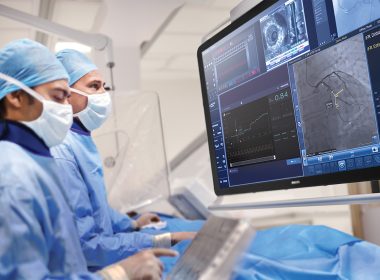
October 29, 2025 3-Year data from the largest global trial to date using Class I, Level A iFR in heart attack patients shows treating additional stenoses in the same procedure showed no significant difference in major outcomes compared with waiting for follow-upAdditional results from the ILIAS ANOCA study highlight the sustained benefits of physiology-guided assessment and tailored medical therapy for patients with angina and no obstructive coronary arteries Amsterdam, the Netherlands – Royal Philips (NYSE: PHG, AEX: PHIA), a global leader in health technology, today announced late-breaking results from the iMODERN trial (Instantaneous wave-free Ratio Guided Multivessel Revascularisation During PCI for Acute Myocardial Infarction) at the Transcatheter Cardiovascular Therapeutics (TCT) 2025 conference, the world’s leading meeting for interventional cardiology. The study compared immediate versus delayed treatment of additional narrowed arteries in heart attack patients to determine whether treating all blockages in one procedure is as safe and effective as waiting for a follow-up procedure. The study compared immediate versus deferred treatment of additional narrowed arteries in heart attack patients to determine whether treating all blockages in a single procedure is superior to waiting for a follow-up procedure – a key question, since many patients have multiple diseased arteries and the optimal timing for complete treatment remains uncertain. In today’s practice, when patients suffer a serious type of heart attack (STEMI), cardiologists urgently open the blocked artery causing the attack. But many of these patients also have disease in other arteries. Often these additional narrowed arteries are not treated right away, either due to time restraints, patient stability, resource constraints or because they stay unnoticed. They may be treated later in a separate hospital stay or not at all, leaving uncertainty about the best timing and approach. The new findings show that patients can safely have additional arteries treated immediately during the first procedure to treat the acute event, rather than during a later second intervention. By confirming the safety of extending Class I, Level A-recommended iFR to non-stable patients, the results offer physicians the opportunity to complete treatment in one session, without compromising long-term outcomes. The iMODERN trial is the largest study to date testing iFR* in the acute heart attack setting, expanding the evidence base for a tool already strongly recommended (Class I, Level A) in stable patients. The findings are published in The New England Journal of Medicine (NEJM), underscoring its global scientific significance and impact on cardiology practice. “These results address one of the longest-standing questions in interventional cardiology,” said Prof. Niels van Royen, co-principal investigator, Radboud University Medical Center, The Netherlands. “Measuring and eventually treating additional arteries can be performed during the first procedure or during a staged procedure. That means cardiologists can feel confident offering patients a complete solution in one sitting when it’s appropriate.” The iMODERN study enrolled 1,146 patients across 41 hospitals in 14 countries directly addressed this question. Patients were randomly assigned to one of two treatment strategies: either immediate physiology-guided treatment of additional narrowed arteries during the first procedure using instantaneous wave-free ratio (iFR), or staged treatment guided by cardiac Magnetic Resonance Imaging (MRI) carried out within four days to six weeks after the heart attack. The study’s main endpoint combined three outcomes: death, another heart attack, or hospitalization for heart failure over three years. After three years of follow-up, the trial found no significant difference in major outcomes – including death, repeat heart attack, or hospitalization for heart failure – between the two approaches. By confirming that both approaches are backed by solid evidence, the trial offers patients more certainty and more personalized care. “Flexibility is critical in real-world practice,” added Prof. Dr. Robin Nijveldt, co-principal investigator, at Radboud University Medical Center, in the Netherlands. “Some patients may benefit from immediate treatment, while others are better served by waiting. iMODERN is a pragmatic study that shows that an immediate intervention is not necessarily better than waiting, if patients are offered a CMR to evaluate the need for a second intervention, giving physicians the evidence they need to tailor decisions to each patient.” “These results complement current international guideline recommendations (Class I recommendation, Level A evidence) for complete revascularization in STEMI,” said Dr. Darshan Doshi, practicing interventional cardiologist and Head of Medical & Clinical at Philips Image-Guided Therapy Devices. “By integrating physiological assessment, iMODERN’s evidence demonstrates that cardiologists can follow these findings for full revascularization while also tailoring treatment to each vessel’s true ischemic relevance.” Complementary evidence from ILIAS ANOCA In related findings presented at the same conference, the ILIAS ANOCA (Inclusive Invasive Physiological Assessment in Angina Syndromes – Angina with No Obstructive Coronary Artery Disease) study further demonstrated the value of physiology-guided decision-making — this time in patients with angina and no obstructive coronary arteries (ANOCA). The ILIAS ANOCA study evaluated the impact of coronary function testing (CFT) in patients whose coronary arteries appear unobstructed on angiography but who continue to experience angina. Conducted across five cardiac centers in the Netherlands and Germany (n=153), the investigator-initiated, randomized, blinded-arm controlled trial compared standard care with CFT-guided medical therapy using Philips Doppler FloWire and FloMap systems. The study found that ad-hoc CFT followed by tailored therapy significantly improved patient-reported angina symptoms and quality of life at six months, with a mean 9.4-point gain in the Seattle Angina Questionnaire summary score (95% CI 3.9–14.9; p=0.001). There were no procedure-related complications or major adverse cardiac events. These results confirm and extend the earlier CorMiCA findings, supporting CFT as a Class I, Level A recommendation in ANOCA patients and demonstrating the potential of Philips Doppler technology to guide individualized treatment strategies safely and effectively. The 12-month results presented on October 26th demonstrate the sustained benefits of CFT-guided care. iFR and MRI technologyPhilips physiology solutions – including its instantaneous wave-free ratio (iFR) pressure wires and software – were used to guide immediate treatment decisions in the trial. Philips also provides advanced cardiac MRI technology, which guided the delayed strategy. By enabling both the invasive and non-invasive approaches evaluated in iMODERN, Philips supported the generation of robust evidence to help guide clinical practice worldwide. * iFR (instantaneous wave-free ratio) is a minimally invasive way to measure blood pressure through the coronary arteries, helping physicians decide which blockages require stenting. For further information, please contact: Joost MalthaPhilips Global External RelationsTel.: +31 6 1055816E-mail: joost.maltha@philips.com About Royal Philips Royal Philips (NYSE: PHG, AEX: PHIA) is a leading health technology company focused on improving people’s health and well-being through meaningful innovation. Philips’ patient- and people-centric innovation leverages advanced technology and deep clinical and consumer insights to deliver personal health solutions for consumers and professional health solutions for healthcare providers and their patients in the hospital and the home.Headquartered in the Netherlands, the company is a leader in diagnostic imaging, ultrasound, image-guided therapy, monitoring and enterprise informatics, as well as in personal health. Philips generated 2024 sales of EUR 18 billion and employs approximately 67,800 employees with sales and services in more than 100 countries. News about Philips can be found at www.philips.com/newscenter.
Attachment

Philips iFR technology

AI-Enabled Ultrasound Elevating the Standard of Care for Breast and Thyroid Ultrasounds at SimonMed Imaging

SCOTTSDALE, Ariz., October 28, 2025 – SimonMed Imaging (“SimonMed”), one of the largest outpatient medical imaging providers and radiology practices in the United States, today announced the launch of Ultrasound+, an AI-enabled ultrasound program powered by FDA-cleared software, Koios DS, to assist with breast and thyroid cancer detection.  Ultrasound+ uses […]

Philips introduces industry-first cath lab integration that automatically synchronizes pre-operative CT with C-arm movement, paving the way for CT-guided PCI

Philips Follow C-arm capability

Follow C-arm

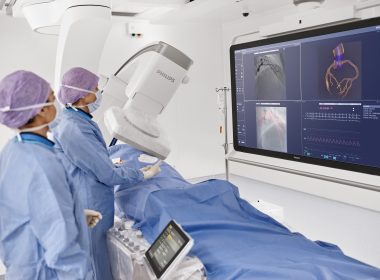
October 27, 2025                                                    New integration of Philips Advanced Visualization Workspace* with the Azurion image-guided therapy platform automatically synchronizes CT images with C-arm movement, supporting workflow efficiency and additional anatomical insights in PCI procedures1 San Francisco, USA and Amsterdam, The Netherlands – At the annual Transcatheter Cardiovascular Therapeutics (TCT 2025) meeting, Royal Philips (NYSE: PHG, AEX: PHIA), a global leader in health technology, today introduced an industry-first innovation that integrates pre-operative CT data directly into the cath lab workflow. This new capability, available through the integration of Philips’ Advanced Visualization Workspace (AVW) with the Azurion image-guided therapy system, marks a first step towards CT-guided percutaneous coronary intervention (PCI), a minimally invasive procedure to open narrowed coronary arteries and restore blood flow to the heart.The new capability, Follow C-arm, automatically synchronizes the 3D reconstruction of coronary arteries with the movement of the Azurion C-arm. As the C-arm angulation changes, the CT volume rotates in real time to match, giving interventionalists the 3D anatomical view without manual interaction. This seamless connection helps clinicians combine the detailed insights of CT imaging with the flexibility of live X-ray guidance inside the cath lab. The combined AVW–Azurion approach aims to provide enhanced anatomical insights to guide complex PCI procedures, publications have shown that leveraging CCTA may lead to reduction in contrast medium use and radiation dose during interventions.1Supporting the shift towards CT-guided PCICoronary computed tomography angiography (CCTA) is increasingly used in global clinical guidelines as a first-line tool for the diagnosis and planning of coronary artery disease. With more patients now arriving at the cath lab with prior CT scans, physicians are seeking ways to incorporate this information into their interventional workflows. By integrating CT data directly into Azurion, Philips is helping interventionalists expand the use of CT beyond diagnosis and planning, supporting a future in which CT-guided PCI becomes standard practice.“By bringing pre-operative CT into the cath lab and linking it directly to the movement of the C-arm, Philips is delivering an industry-first that helps interventionalists prepare for and execute PCI procedures with greater confidence,” said Mark Stoffels, Business Leader Image-Guided Therapy Systems at Philips. “This seamless integration is a significant step towards CT-guided PCI, aligning with our commitment to improving workflow efficiency and advancing patient care in interventional cardiology.”The launch builds on the global success of Philips’ Azurion image-guided therapy platform, the world’s leading system designed for seamless integration of advanced applications. Since its introduction in 2017, Azurion has been used to treat more than 6.4 million patients annually in over 80 countries, helping physicians perform minimally invasive procedures with greater confidence and efficiency.For more information about Philips’ presence at TCT, please visit the Philips TCT 2025 landing page. For further information, please contact:Joost MalthaPhilips Global External RelationsTel.: +31 6 1055816E-mail: joost.maltha@philips.com About Royal Philips Royal Philips (NYSE: PHG, AEX: PHIA) is a leading health technology company focused on improving people’s health and well-being through meaningful innovation. Philips’ patient- and people-centric innovation leverages advanced technology and deep clinical and consumer insights to deliver personal health solutions for consumers and professional health solutions for healthcare providers and their patients in the hospital and the home.Headquartered in the Netherlands, the company is a leader in diagnostic imaging, ultrasound, image-guided therapy, monitoring and enterprise informatics, as well as in personal health. Philips generated 2024 sales of EUR 18 billion and employs approximately 67,800 employees with sales and services in more than 100 countries. News about Philips can be found at www.philips.com/newscenter. Disclaimer: * The Follow C-arm capability as part of Philips Advanced Visualization Workspace may not be available in all markets. Please contact your Philips representative for more details.Reference: 1. J Cardiovasc Comput Tomogr. 2025 May-Jun;19(3):277-290.

Attachments

Philips Follow C-arm capability

Follow C-arm

Real-World Data Presented at TCT 2025 Demonstrates the EggNest™ Complete Radiation Protection System Significantly Reduces Radiation Exposure for the Entire Cath Lab Team

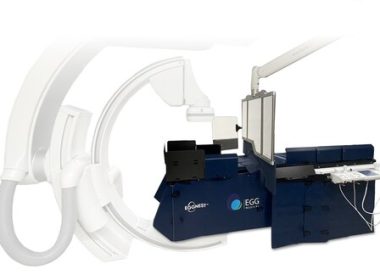
SAN FRANCISCO, Oct. 26, 2025 /PRNewswire/ — At the 2025 Transcatheter Cardiovascular Therapeutics® (TCT) Conference, Dr. Jarrod Frizzell of The Christ Hospital (Cincinnati, OH) presented real-world studies¹,² demonstrating that the EggNest™ Complete Radiation Protection System from Egg…

Conavi Medical to Highlight Novasight Hybrid™ Imaging at TCT 2025

Company to Participate in Educational Imaging Sessions and Feature Hybrid IVUS/OCT Imaging TechnologyTORONTO, Oct. 23, 2025 (GLOBE NEWSWIRE) — Conavi Medical Inc. (TSXV: CNVI) (OTCQB: CNVIF), a commercial-stage medical device company focused on intravascular imaging solutions, today announced that it will participate in the upcoming Transcatheter Cardiovascular Therapeutics (TCT) 2025 conference, taking place October 25 – 28, 2025, at the Moscone Center in San Francisco, California. Attendees will have the opportunity to learn more about Conavi’s hybrid intravascular imaging technology, which combines intravascular ultrasound (IVUS) and optical coherence tomography (OCT) to provide complementary insights into coronary anatomy. Conavi will share clinical images acquired using its first-generation Novasight Hybrid™ imaging system and provide information on the potential role of hybrid IVUS/OCT imaging in guiding complex percutaneous coronary interventions (PCI). “TCT provides an important forum for clinical education and scientific exchange in interventional cardiology,” said Thomas Looby, President and CEO of Conavi Medical. “We look forward to engaging with physicians and thought leaders to discuss how hybrid intravascular imaging can enhance procedural decision-making and improve patient outcomes.” The next-generation version of Conavi’s Novasight Hybrid system was submitted to the U.S. Food and Drug Administration (FDA) for 510(k) clearance in September 2025. Conavi’s first-generation version previously received FDA 510(k) clearance and Health Canada approval and was used at seven luminary cardiovascular care hospitals in North America. Intravascular Imaging Education SessionsConavi will also participate in the Intravascular Imaging & Training sessions at the Imaging & Training Center, held throughout the day on Sunday, October 26, and Monday, October 27. These physician-led sessions will feature expert case presentations illustrating how intravascular imaging can be used to guide challenging PCI procedures, including those involving calcified lesions, acute coronary syndrome (ACS), and in-stent restenosis (ISR). Conference Details Event: Transcatheter Cardiovascular Therapeutics (TCT) 2025Dates: October 26 – 29, 2025Location: Moscone Center, San Francisco, CaliforniaConavi Medical Booth: #2126 About TCT The Transcatheter Cardiovascular Therapeutics (TCT) conference, organized by the Cardiovascular Research Foundation (CRF), is the world’s leading educational meeting specializing in interventional cardiovascular medicine. TCT brings together thousands of physicians, scientists, and industry leaders from around the globe to present the latest research, live cases, and innovations in device-based therapies for coronary, structural, and endovascular disease. About Conavi Medical Conavi Medical is focused on designing, manufacturing, and marketing imaging technologies to guide common minimally invasive cardiovascular procedures. Its patented Novasight Hybrid™ System is the first to combine intravascular ultrasound (IVUS) and optical coherence tomography (OCT) into a single device, enabling simultaneous and co-registered imaging of coronary arteries. The first-generation Novasight Hybrid™ System received regulatory clearance in the U.S., Canada, China, and Japan. For more information, visit conavi.com. Cautionary Statement Regarding Forward-Looking Information This news release contains “forward-looking statements” within the meaning of applicable Canadian and U.S. securities laws, which reflect the current expectations of management of Conavi’s future growth, results of operations, performance and business prospects and opportunities. Forward-looking statements are frequently, but not always, identified by words such as “may”, “would”, “could”, “will”, “anticipate”, “believe”, “plan”, “expect”, “intend”, “estimate”, “potential for” and similar expressions, although these words may not be present in all forward-looking statements. Forward-looking statements that appear in this release may include, without limitation, references to Conavi’s plans for the commercialization of its Novasight Hybrid™ System and expected FDA clearance and the commercial launch of next generation Novasight in the U.S. These forward-looking statements reflect management’s current beliefs with respect to future events, and are based on information currently available to management that, while considered reasonable by management as of the date on which the statements are made, are inherently subject to significant business, economic and competitive uncertainties and contingencies which could result in actions, events, conditions, results, performance or achievements to be materially different from those projected in the forward-looking statements. Forward-looking statements involve significant risks, uncertainties and assumptions and many factors could cause Conavi’s actual results, performance or achievements to be materially different from any future results, performance or achievements that may be expressed or implied by such forward-looking statements. Such factors and assumptions include, but are not limited to, Conavi’s ability to retain key personnel; its ability to execute on its business plans and strategies; and other factors listed in the “Risk Factors” sections of the joint information circular of Conavi dated August 30, 2024 and in the final short form prospectus of Conavi dated April 15, 2025 (each of which may be viewed at www.sedarplus.com). Should one or more of these risks or uncertainties materialize, or should assumptions underlying the forward-looking statements prove incorrect, actual results, performance, or achievements may vary materially from those expressed or implied by the forward-looking statements contained in this news release. These factors should be considered carefully, and prospective investors should not place undue reliance on the forward-looking statements. Although the forward-looking statements contained in the news release are based upon what management currently believes to be reasonable assumptions and Conavi has attempted to identify important factors that could cause actual actions, events, conditions, results, performance or achievements to differ materially from those described in forward-looking statements, Conavi cannot assure prospective investors that actual results, performance or achievements will be consistent with these forward-looking statements. Except as required by law, Conavi expressly disclaims any intention or obligation to update or revise any forward-looking statements whether as a result of new information, future events or otherwise. Accordingly, investors should not place undue reliance on forward-looking statements. All the forward-looking statements are expressly qualified by the foregoing cautionary statements. Neither the TSX Venture Exchange nor its Regulation Services Provider (as that term is defined in the policies of the TSX Venture Exchange) accepts responsibility for the adequacy or accuracy of this press release. Contact:Stefano PiconeChief Financial Officer(416) 483-0100

Hyperfine Announces First Patients Enrolled in PRISM PMR to Evaluate the Use of Next-Generation Swoop® System in the Operating Room Setting

With several patients already enrolled in the study, PRISM PMR is designed to evaluate the Swoop® system’s clinical utility in the operating room. GUILFORD, Conn.–(BUSINESS WIRE)–Hyperfine, Inc. (Nasdaq: HYPR), the groundbreaking health technology company that has redefined brain imaging with the first FDA-cleared AI-powered portable MRI system for the brain—the Swoop® […]

FDA Clears Access Vascular HydroMid® and HydroPICC® Catheters With Anti-Thrombogenic Indication

BILLERICA, Mass.–(BUSINESS WIRE)–Access Vascular, Inc. (AVI), a leader in advanced vascular access solutions, today announced that the U.S. Food and Drug Administration (FDA) cleared a new indication for its single-lumen MIMIX® HydroMid® and single- and dual-lumen HydroPICC® catheter lines. The updated labeling recognizes the devices’ proprietary hydrogel material as having anti-thrombogenic […]

SpectraWAVE Receives 510(k) Clearance for X1™-FFR, an AI-enabled, Wire-Free, Drug-Free, Single Angiogram Physiology Solution

BEDFORD, Mass.–(BUSINESS WIRE)–SpectraWAVE, Inc., a medical imaging company focused on improving the treatment and outcomes for patients with coronary artery disease (CAD), today announced U.S. Food and Drug Administration (FDA) 510(k) clearance for its wire-free, drug-free, single angiogram derived physiology product, X1TM-FFR. X1-FFR provides physicians physiology results from a single […]

Subtle Medical Announces Positive Findings from Proof-of-Concept Study with Bayer Investigating AI To Lower Gadolinium Dose in CE-MRI

MENLO PARK, Calif., Oct. 21, 2025 /PRNewswire/ — Subtle Medical, Inc., a leader in AI-powered medical imaging solutions, today announced positive findings from a proof-of-concept (POC) study with Bayer, a leader in Radiology, evaluating Subtle Medical’s investigational SubtleGAD™…